
Phản ứng sang chấn là phản ứng tự nhiên trước những sự kiện khó chịu, cả về thể chất, cảm xúc và tâm lý. Việc nhận ra và hiểu rõ các phản ứng sang chấn cá nhân là cực kỳ quan trọng giúp chữa lành và hồi phục. Các chiến lược như trị liệu, chánh niệm và mạng lưới hỗ trợ có thể giúp kiểm soát sang chấn, thúc đẩy sức bật tinh thần và sức khỏe.
Trauma responses are natural reactions to distressing events, involving physical, emotional & psychological dimensions. Recognizing & understanding individual trauma responses is crucial for effective healing & recovery. Strategies like therapy, mindfulness & support networks can help individuals manage trauma, promoting resilience & wellbeing.
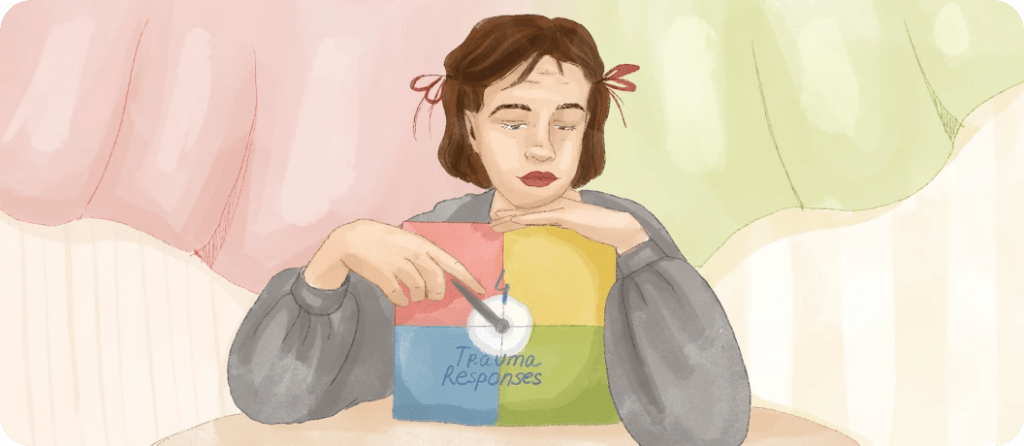
Các phản ứng sang chấn. Trauma Responses
Chia sẻ quá nhiều, giải thích quá nhiều, trút xả sang chấn, quá tự lập, tình dục hóa quá mức, hay lấy lòng người khác? Over-sharing, over-explaining, trauma dumping, hyper-independence, hypersexualization, people pleasing?
Bạn có những đặc tính quen thuộc này không? Đây có thể không phải đặc trưng tính cách, mà thay vào đó, là phản ứng sang chấn.
Do these sound like common traits you have? These may not be character traits but, instead, trauma responses.
Sang chấn là chấn thương tinh thần, và cơ thể có thể sẽ phản ứng với những ký ức trong vô thức về những sự kiện cực kỳ tiêu cực mà chính chúng ta cũng không biết. Cơ thể bảo vệ chúng ta từ trong tiềm thức khỏi sang chấn trong tương lai.
Trauma is a mental injury, and our body may react to unconscious memories of significant negative events unknown even to us. Our body subconsciously protects us from future trauma.
Cách chúng ta phản ứng với sang chấn để lại hệ quả lớn lên cách chúng ta sống. Phản ứng sang chấn đảm bảo sự an toàn về thể chất và tinh thần cho chúng ta; tuy nhiên, các phản ứng không trong dự tính này có thể cản trở khả năng sống một cuộc đời thăng hoa.
How we respond to trauma has consequential implications on how we live our lives. Trauma responses ensure physical and emotional safety; however, these unintended reactions may interfere with our ability to flourish.
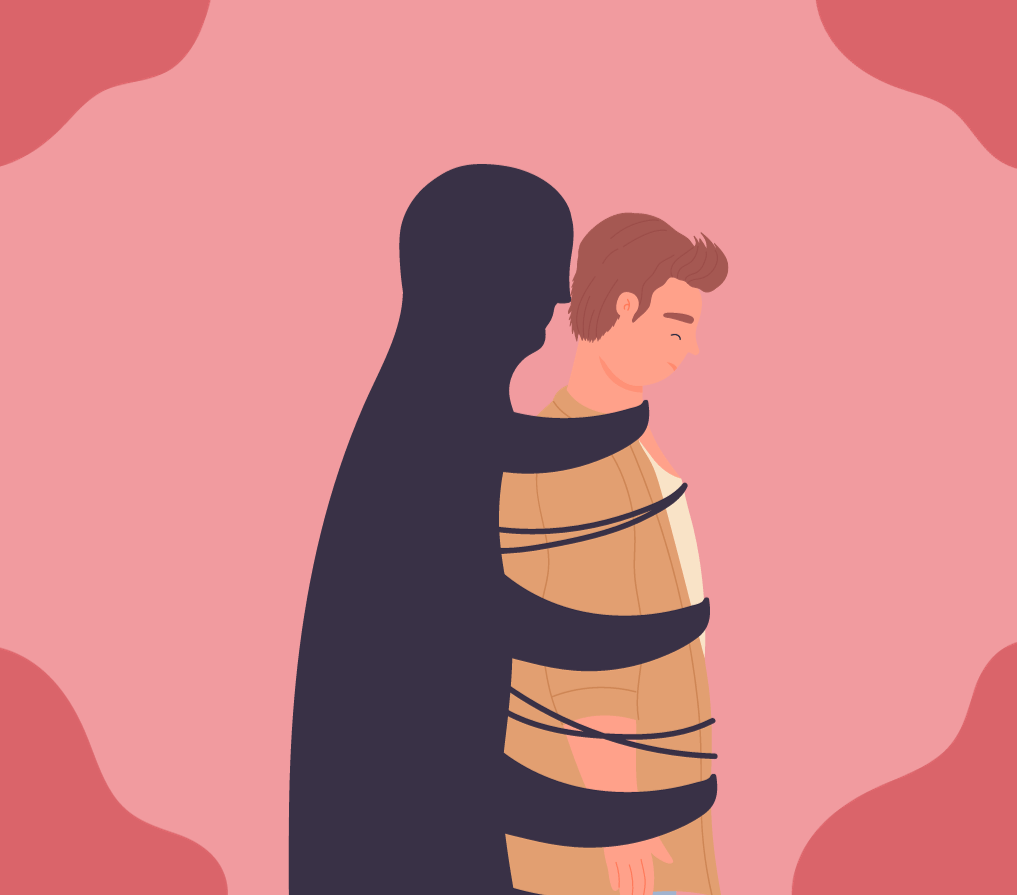
Làm sao ta có thể dạy cho khách hàng xác định được những phản ứng vô thức này và sử dụng chúng để làm lợi cho họ? Hãy tiếp tục đọc bài viết để tìm hiểu những công cụ có thể giúp ta trong vấn đề này.
How can we teach our clients to identify these unintentional reactions and use them to their benefit? Read on to gain the tools to help us accomplish this feat.
Nhận diện phản ứng sang chấn theo định nghĩa. Recognizing a Trauma Response for What It Is
Phản ứng sang chấn là bẩm sinh; chúng xuất hiện trong vô thức. Một phản ứng với một mối đe dọa ta nhận biết được được gọi là phản ứng sang chấn. Nó là bản năng sinh tồn; là phản xạ tự động.
Trauma responses are innate; they occur without our consciousness. A reaction to a perceived threat is called a trauma response. It is a survival instinct; it is reflexive and automatic.
Cơ thể bạn phản ứng với mối đe dọa nó nhận diện được mà không cần sự chấp thuận từ bạn. Mùi hương hay âm thanh có thể nhắc bạn nhớ về sang chấn bạn đã trải qua và mang trở lại những ký ức có lẽ đã từng bị đè nén. Mặc cho chủ thể có nhận thức được hay không, cái tôi trong vô thức vẫn nhớ, và cơ thể vẫn cứ phản ứng.
Your body reacts to this perceived threat without your approval. Smells and sounds may remind your clients of the trauma they experienced and bring about memories that perhaps at one time were repressed. Despite the individual’s awareness, the unconscious self still remembers, and the body reacts.
Một phản ứng sang chấn là cách hệ thần kinh thích nghi sau một tình huống nghiêm trọng và có thể xuất hiện theo nhiều cách khác nhau, dù mối đe dọa là có thật, hay do tưởng tượng.
A trauma response is how your nervous system has adapted following a significant situation and can manifest in various ways, whether there is an actual threat, or a threat is perceived.
Phản ứng sang chấn khiến một người cảnh giác cao độ, vốn có thể khiến chủ thể bị choáng ngợp trong những tình huống vốn bình thường. Ngược lại, một người cảnh giác cao độ có thể phản ứng khá hiệu quả trong những lúc khủng hoảng thế này.
Trauma responses cause a person to be hypervigilant, which may create an overwhelmed individual under normal circumstances. Contrarily, a person experiencing hypervigilance may also prove to be an effective person during crises.
Phản ứng sang chấn nổi tiếng là tiêu cực; tuy nhiên, nếu bạn có thể nhận ra chúng, bạn có thể ngăn ngừa chúng kiểm soát đời sống bạn.
Trauma responses get a bad rap; however, if clients can recognize them, they can prevent them from controlling their lives.
4 Dạng phản ứng sang chấn thường gặp. 4 Typical Trauma Response Types
Ban đầu, chống trả hay bỏ chạy được cho là những phản ứng duy nhất dành cho căng thẳng, vốn tập trung vào hệ thần kinh tự chủ.
Originally, fight and flight were thought to be the only responses to stress, which focused on the autonomic nervous system (McCarty, 2016; Katz et al., 2021).
Đóng băng, dưới góc độ một dạng phản ứng sang chấn, sau này được giới thiệu sau các quan sát ở chuột trong các tình huống căng thẳng.
Freeze, as a trauma response type, was later developed after observing lab rats in stressful situations (Katz et al., 2021).
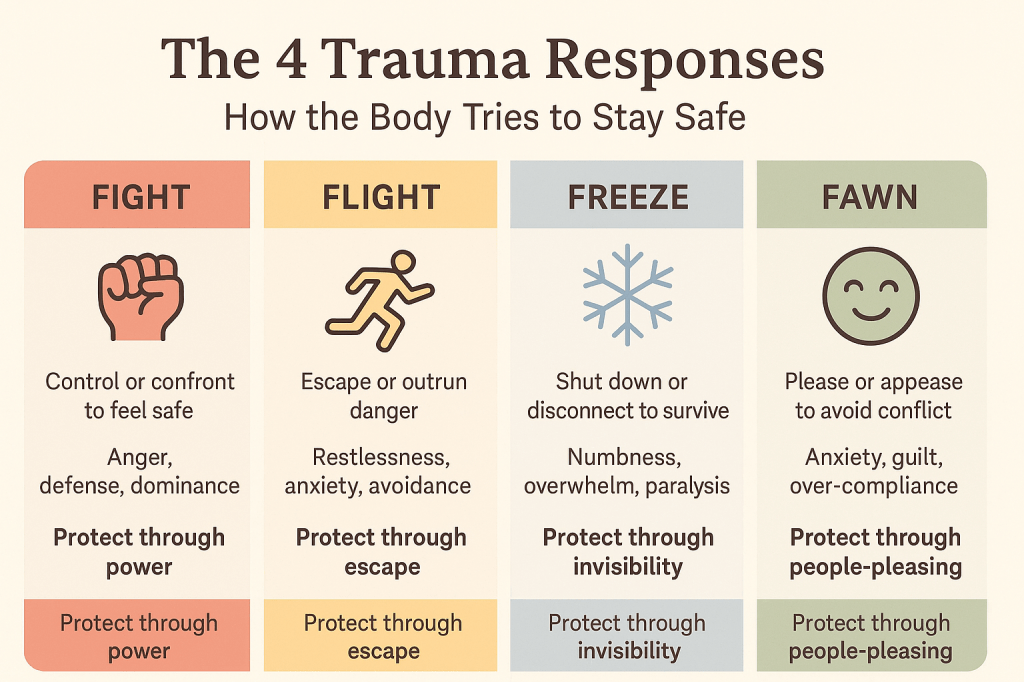
Ngày nay, bốn dạng phản ứng sang chấn được biết đến rộng rãi nhất bao gồm chống trả, bỏ chạy, đóng băng và xu nịnh. Mỗi dạng hành động này đều là phản ứng thích nghi, phục vụ chức năng sinh tồn trong thời gian ngắn.
Today, the four most commonly known trauma response types include fight, flight, freeze, and fawn. Each of these actions is an adaptive, functional short-term survival counteraction.
Chống trả. Fight
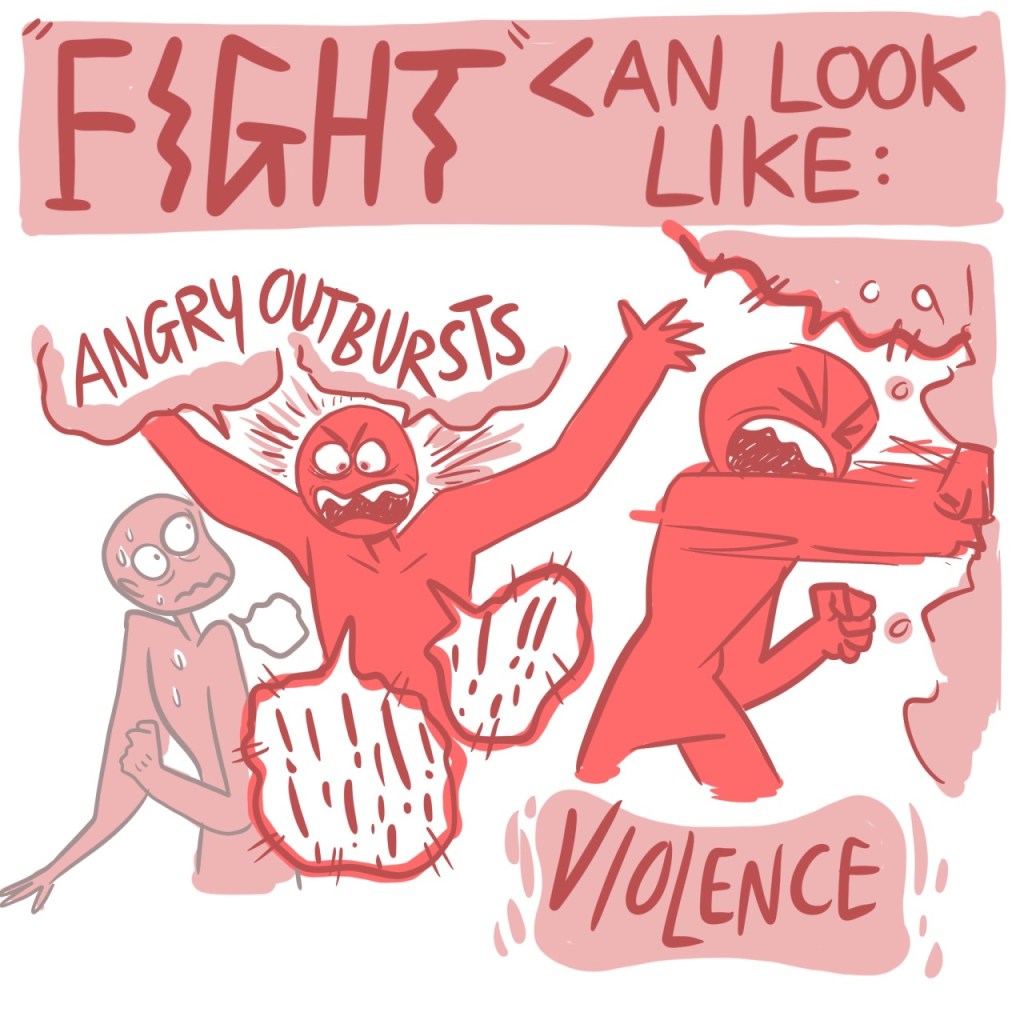
Như chúng ta đã biết, phản ứng chống trả là chống lại kẻ gây ra mối đe dọa. Ví dụ mô tả phản ứng chống trả bao gồm đá, đấm, hoặc đe dọa kẻ tấn công. Cũng có thể là tranh cãi hoặc la hét.
As we know, the fight response involves combativeness toward the perpetrator. Example demonstrations of fight may include kicking, punching, or threatening the attacker (Katz et al., 2021). It may also include being verbally argumentative and yelling.
Nếu một người dễ nóng giận, họ có thể cho thấy phản ứng sang chấn dạng chống trả. Triệu chứng kích động này có thể ngụ ý sự tự phê bình bản thân khi một người cảm thấy mình bị đe dọa từ bên trong.
If an individual is quick to anger, they may be demonstrating a fight trauma response. This symptom of arousal may indicate self-criticism when someone feels internally threatened (Germer & Neff, 2015).
Phản ứng này có thể bao gồm bất kỳ nỗ lực nào đứng lên chống lại mối đe dọa. Đây là một hình thức thể hiện sự quyết đoán. Ở mức độ lành mạnh, nó vạch ra những ranh giới lành mạnh.
This reaction may include any attempt to stand up against a threat. It is a form of assertiveness. At a healthy level, it delineates healthy boundaries.
Ở cấp độ bản năng, nếu một con vật bị tấn công, nó có thể chọn chiến đấu nếu mối đe dọa trong tầm kiểm soát được. Nếu con vật cảm thấy nó không thể đánh thắng, nó có thể chọn kiểu phản ứng tiếp theo.
At a primal level, if an animal feels it is being attacked, it may choose to fight back if the threat is manageable. If the animal feels that it cannot successfully fight the threat, it may resort to our next trauma response.
Bỏ chạy. Flight
Bỏ chạy, trong thực tế hay cách nói ẩn dụ, là chạy khỏi mối nguy hiểm có thật hoặc tưởng tượng. Đây là một hành động không đối đầu và né tránh mối đe dọa. Quan trọng hơn, nó là một chuỗi các phản ứng do sinh học quyết định trước căng thẳng. Trốn chạy là tách rời khỏi kích thích gây căng thẳng. Đi kèm với chống trả, nó là nền tảng của nghiên cứu phản ứng căng thẳng của Walter B. Cannon.
Flight involves literally or metaphorically running from an actual or perceived danger. It is an act of nonconfrontation and avoidance of a threat. More importantly, it is a biologically determined sequence of responses to stress (Bracha, 2004). Flight is a disengagement from the stress-inducing stimulus. Paired with fight, it is the cornerstone of stress response research by Walter B. Cannon (McCarty, 2016).
Bỏ chạy có thể có thể bao gồm thói quen rời khỏi phòng hoặc chạy khỏi nhà sau một trận cãi vã. Nó cũng có thể là lạm dụng rượu bia và ma túy để né tránh cảm xúc.
Flight may include the habit of leaving the room or fleeing from the home following an argument. It may also include drug and alcohol abuse to avoid emotions.
Hơn nữa, người có phản ứng bỏ chạy cũng có thể ngắt kết nối với gia đình, bạn bè và đồng nghiệp. Một người thể hiện phản ứng bỏ chạy có thể tự cô lập bản thân.
Further, individuals demonstrating the flight response may be disconnected from their family, friends, or coworkers. Someone exhibiting the flight response may isolate themselves.

Chia sẻ quá mức, giải thích quá mức, và xả trút sang chấn có thể cho thấy sự phân ngăn tâm lý. Nếu một người phân ngăn tâm lý, có thể họ đang cố tách biệt bản thân khỏi sang chấn trong vô thức, từ đó giúp họ nói về sự kiện đó một cách thờ ơ.
Over-sharing, over-explaining, and trauma dumping may indicate compartmentalization. If an individual shows compartmentalization, it may mean that they are unconsciously trying to distance themselves from the trauma, thus allowing them to speak of the event nonchalantly.
Ngoài ra, hành động này còn giúp chủ thể tránh đối đầu trực tiếp hoặc phải đối phó với trải nghiệm khó chịu. Việc cân nhắc mục đích của việc tiết lộ thông tin, phản ứng này cũng có thể nhằm thu hút sự chú ý, bao gồm cả lòng cảm thông hoặc sự công nhận. Chủ thể có thể tìm kiếm hỗ trợ hoặc công nhận trong vô thức nhằm ứng phó với sang chấn. Việc tìm kiếm chốn nương náu hay an ủi trong sự thấu cảm hoặc công nhận của người khác là một minh họa về phản ứng bỏ chạy.
Further, this practice allows the individual to avoid direct confrontation or processing of the distressing experience. Considering the purpose of divulging the information, this response could also be intended to gain attention (Shabahang et al., 2022), including sympathy or validation. Individuals may be unconsciously seeking external support or validation to cope with the trauma. Seeking refuge or solace in the empathy or validation of others is an illustration of the flight response.
Quá tự lập xuất hiện khi một người nhìn nhận rằng lệ thuộc vào người khác là không an toàn. Họ tránh nhờ vả và thay vào đó, dựng lên một bức tường. Đây có thể là một phản ứng sang chấn kiểu bỏ chạy, khi chủ thể đang cố né tránh một tương tác hoặc một mối quan hệ.
Hyper-independence occurs when an individual internalizes that dependence on others is unsafe. They avoid asking for help and instead build a wall. This could be a trauma response of flight, as the individual is avoiding an interaction or relationship.
Tình dục hóa quá mức có thể cũng là một phản ứng bỏ chạy. Một người cuồng dâm có thể đang chạy trốn khỏi cảm xúc của chính họ. Tương tự, dạng phản ứng này có thể đại diện cho phản ứng xu nịnh khi họ nỗ lực lấy lòng người khác, sẽ được thảo luận bên dưới.
Hypersexualization may also suggest a flight response. Someone who is hypersexual may be fleeing from other emotions. Likewise, this response may also represent the fawn response as an attempt to please others, which we will discuss later.

Đóng băng. Freeze
Đây là một chiến thuật hiệu quả khi bạn không có lựa chọn chống trả hoặc bỏ chạy. Khi phản ứng chống trả hay bỏ chạy thường gặp không được thực hiện, đây được coi là phản ứng đóng băng.
This is an effective technique when fight or flight are not an option (d’Andrea et al., 2013). When the typical fight-or-flight responses are put on hold, this is considered the freeze response (Kozlowska et al., 2015).
Dạng phản ứng căng thẳng này bao gồm dừng lại, nhìn, lắng nghe và cảnh giác cao độ. Một người có thể có phản ứng này khi họ đang đánh giá một tình huống. Một số cho rằng phản ứng này đến trước phản ứng chống trả – hay bỏ chạy, khi con vật hoặc nạn nhân đang quyết định phản ứng kiểu nào.
This stress response involves the typical stop, look, and listen response and commands hypervigilance (Bracha, 2004). An individual may resort to this response when assessing a situation. Some suggest this response precedes the fight-or-flight, as the animal or victim is determining which response to employ.
Một ví dụ điển hình là, lúc gặp phải gấu, trực tiếp tấn công nó có thể là lựa chọn không khôn ngoan; tương tự, chạy trốn cũng không khá khẩm gì hơn. Giả chết có lẽ là cách có thể giúp bạn thoát khỏi tình thế này. Bất động sẽ giúp xóa bỏ dấu vết âm thanh và thị giác vốn có thể làm xuất hiện sự hung hăng.
As a primal example, during a bear encounter, physically attacking the bear may be unwise; likewise, running from the bear may not be helpful either. Feigning death may be your way out of this critical situation. This immobility eliminates auditory and visual clues that would otherwise provoke aggression (Baldwin, 2013).
Ăn uống quá độ có thể được xem là một dạng phản ứng đóng băng. Thay vì đối mặt với tình huống, chủ thể tiêu thụ một lượng lớn đồ ăn trong một khoảng thời gian tương đối ngắn. Dạng tiêu thụ đồ ăn này có thể đóng vai trò là một kiểu hành vi tự xoa dịu hoặc tự điều trị.
Binge eating could be considered a freeze response (Rodriguez-Quiroga et al., 2021). Instead of facing the situation, a person who engages in binge eating consumes an unusually large amount of food in a relatively short amount of time. This type of food consumption may serve as self-soothing behavior or self-medication.
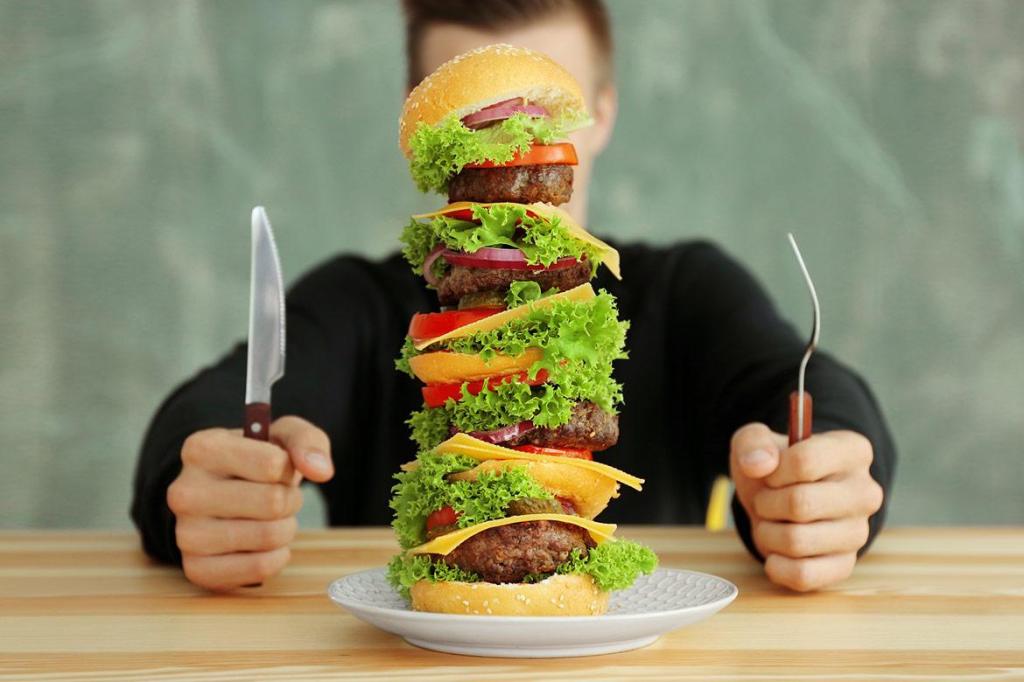
Ăn lượng lớn đồ ăn có thể gây ra trạng thái phân ly, từ đó giúp chủ thể chạy trốn và giúp ứng phó với trải nghiệm sang chấn khiến họ choáng ngợp. Dạng rối loạn ăn uống này có thể cũng nguy hiểm như chứng cuồng ăn và biếng ăn tâm thần.
Eating large quantities of food may induce a dissociative state, thus providing an escape and helping to cope with the overwhelming experience of trauma. This type of eating disorder can be just as dangerous as bulimia and anorexia.
Phản ứng căng thẳng này giúp chủ thể trốn tránh, cho thấy bạn không phải một mối nguy. Hơn nữa, người có phản ứng đóng băng sẽ có cơ hội xử lý mối đe dọa.
This stress response helps the individual to hide, and it shows that you are not a threat. Further, the person experiencing the freeze response is provided the opportunity to process the threat.
Xu nịnh. Fawn
Phản ứng sang chấn ít được biết đến và ít được hiểu rõ hơn này có thể bị nhầm lẫn với một đặc trưng tính cách. Có thể nói đây là phản ứng duy nhất có sự gắn kết với mối đe dọa và nỗ lực thay đổi hành vi của đối phương. Phản ứng sang chấn này xuất phát từ nhu cầu bản năng của chúng ta muốn được kết nối xã hội và cùng điều tiết tình huống.
This lesser-known and least-understood trauma response may be confused with being a character trait. Arguably, this may be the only response where one engages with the potential threat and attempts to change the other person’s behavior. The trauma response stems from our innate need for social connection and co-regulation.
Trong phản ứng này, một người có thể bắt chước cử chỉ, nét mặt hoặc lời nói của người kia. Họ cảnh giác cao độ về hạnh phúc và sự an toàn của mọi người trong phòng. Họ quá dễ chịu và thường xuyên hy sinh ranh giới của mình.
In this response, a person may mirror the other individual’s gestures, facial expressions, or speech. They are hypervigilant about everyone’s happiness and safety in the room. They are overly agreeable and frequently sacrifice their boundaries.
Ví dụ, một người đàn ông gọi món bít tết chín kỹ ăn kèm salad trong một nhà hàng nổi tiếng. Cái anh ta nhận được là bít nấu chín tái và khoai tây chiên. Đó không phải món anh ta gọi; tuy nhiên, anh ta không báo người người phục vụ vì sợ làm ai đó thất vọng, dù là nhân viên phục vụ hay đầu bếp.
For example, a man orders a well-done steak with a side salad from a notable restaurant. What he receives is a steak that is cooked medium rare with a side of French fries. That was not his order; however, he does not bring this oversight to the server’s attention for fear of disappointing someone, whether that be the wait staff or the chef.
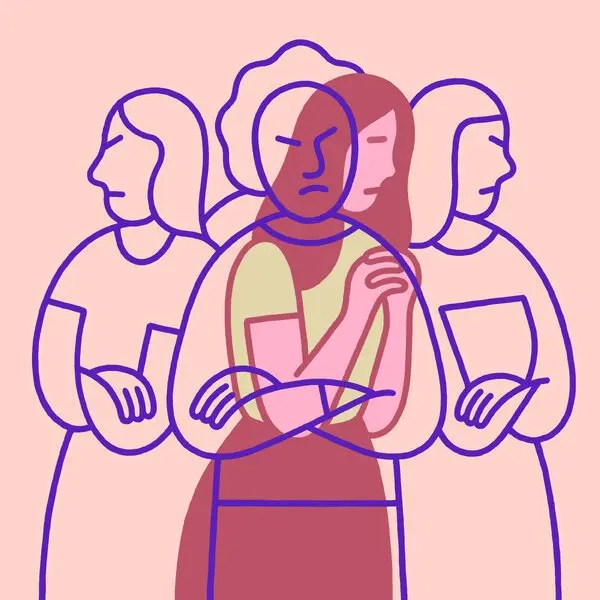
Người thường xuyên có phản ứng xu nịnh có thể được mô tả là những kẻ hay lấy lòng người khác, cuồng công việc, hay thanh minh và sơ hở là xin lỗi. Khi một sự kiện sang chấn diễn ra, nạn nhân có thể xuất hiện hội chứng Stockholm, là khi một người nỗ lực xoa dịu kẻ bạo hành hoặc bắt giữ họ.
People who frequently demonstrate the fawn response may be described as people pleasers, workaholics, over-explainers, and over-apologizers. During a traumatic event, a victim may experience Stockholm syndrome, which is when an individual attempts to appease one’s abuser or captor (Bailey et al., 2023).
Đồng lệ thuộc có thể là một phản ứng xu nịnh. Đây là một kiểu quan hệ không lành mạnh và rối loạn chức năng khi một người sắm vai “người cho đi”. Phản ứng này có thể được gọi là phản ứng “người bạn” và “xoa dịu”
Codependency can also be a fawn response (Walker, 2013). This is an unhealthy and dysfunctional relationship dynamic involving one person assuming the role of the “giver.” This response may also be referred to as the “friend” and “appease” response.
3 phản ứng với sang chấn ít được biết đến hơn. 3 Lesser-Known Responses to Trauma
Bên cạnh các phản ứng thường gặp như chống trả, bỏ chạy, đóng băng và xu nịnh, thì cũng có một số phản ứng khác bạn không thấy quen thuộc lắm. Hoảng sợ, đầu hàng và ngất xỉu là một số các phản ứng sang chấn khác ít được biết đến hơn theo học thuyết từ nhiều chuyên gia trong lĩnh vực này.
Besides the typical fight, flight, freeze, and fawn, there are a few more responses you may not be familiar with. Fright, flag, and faint are a few of the lesser-known trauma responses that are theorized by professionals of this field.
Hoảng sợ. Fright
Phản ứng sợ hãi biểu hiện bằng bất động toàn thân. Ban đầu, người ta giả thiết đây là phản ứng đóng băng; tuy nhiên, chẳng bao lâu sau người ta biết rõ phản ứng này khác biệt với hoảng sợ.
The fright response indicates tonic immobility. At first, the freeze response was theorized; however, it soon became apparent that this response could be differentiated from fright (Katz et al., 2021).
Tương tự như đóng băng và ngất xỉu, chủ thể có phản ứng sợ hãi sẽ giả vờ chết. Điều này dễ hiểu hơn khi kẻ săn mồi đã tóm được con mồi trong tay, và con mồi trở nên mềm nhũn và ngừng giãy giụa để khiến bản thân kém hấp dẫn. Trong trường hợp này, phản ứng sợ hãi cho thấy trạng thái kích thích cao độ và sẵn sàng đối mặt hoặc bỏ chạy khỏi mối nguy hiểm.
Similar to freeze and faint, the person experiencing fright will play dead, so to speak (Bracha, 2004). This is better understood when a predator has its prey in its grasp, and the prey goes limp and ceases its struggle to make itself less desirable for consumption. In this case, the fright response involves a heightened state of arousal and readiness to confront or flee from danger.
Đầu hàng. Flag
Phản ứng đầu hàng được định hình bằng sự tê liệt cảm xúc, nhận thức suy giảm, giảm kích động và đầu hàng. Schauer và Elbert (2015) khẳng định rằng phản ứng đầu hàng là một phần của chuỗi 6 phản ứng sợ, tiến triển thành một chức năng tự vệ trong những tình huống đe dọa tính mạng. Tháp phản ứng này bao gồm các phản ứng sau được xếp theo thứ tự: đóng băng – bỏ chạy – chiến đấu – hoảng sợ – đầu hàng – và ngất xỉu.
The flag response is characterized by numbness of emotion, cognitive failure, a drop in arousal, and surrender. Schauer and Elbert (2015) assert that the flag response is part of a sequence of six fear responses that progress as a function of defense during a life-threatening situation. The cascade consists of the following responses in sequential order: freeze – flight – fight – fright – flag – and faint.
Sự chú ý của một người có thể sẽ ở đâu đó khác, và họ có thể cảm thấy mình đang quan sát bản thân mình, vốn cũng là một dụ về sự phân ly. Đây là một cơ chế tự vệ tích hợp sẵn làm tăng khả năng chịu đau hoặc tê liệt phản ứng cảm xúc.
The individual’s attention may be elsewhere, and they may feel like they are observing themself, which is an example of disassociation. This is a built-in defense mechanism that increases pain tolerance or numbs emotional response.
Người trải qua sang chấn có thể xuất hiện mất trí nhớ tạm thời do não bộ cố bảo vệ sức khỏe tinh thần của nó.
The person who experienced the trauma may exhibit memory lapses as their brain attempts to protect its emotional wellbeing.

Ngất xỉu. Faint
Cũng là một phản ứng do sinh học để phòng vệ căng thẳng cấp, ngất xỉu là một phản ứng ít được biết đến hơn.
Also a biologically determined response to acute stress defense, faint is a lesser-known response (Bracha, 2004).

Còn được gọi là phản ứng gục ngã, phản ứng này cũng cho thấy sự bất động toàn thân và lựa chọn của cơ thể khi phản ứng chống trả hay bỏ chạy không khả thi. Một ví dụ thường gặp của hiện tượng này là khi một người thấy máu và thực sự ngất luôn ngay khi thấy. Họ không “giả chết” như mô tả ở phản ứng hoảng sợ; cơ thể họ ngưng chuyển động trong vô thức.
This may also be referred to as the “flop” response, also indicative of tonic immobility and is a preferable option for the body when fight or flight is not possible. A common example of this phenomenon is when a person sees blood and literally faints from the sight of it. They are not “playing dead” as illustrated in the fright response; their body unconsciously suspends movement.
Thay vì bị kích động và sẵn sàng có phản ứng hoảng sợ, dạng phản ứng này tập trung khiến cơ thể bất động khi phản ứng với căng thẳng quá mức.
Instead of the arousal and readiness associated with the fright response, this type of response centers around immobility in response to overwhelming stress.
Ứng phó với Rối loạn căng thẳng sau sang chấn. Dealing With PTSD
Không giống như các rối loạn khác được liệt kê trong Cẩm nang số liệu và Chẩn đoán các rối loạn tâm thần (DSM), chẩn đoán một người mắc PTSD đòi hỏi cá nhân người bệnh phải có tiếp xúc với một dạng sự kiện đặc biệt.
Unlike the other disorders listed in the Diagnostic and Statistical Manual of Mental Disorders, a diagnosis of post-traumatic stress disorder (PTSD) requires exposure to a particular type of event (American Psychiatric Association, 2013; Baldwin, 2013).
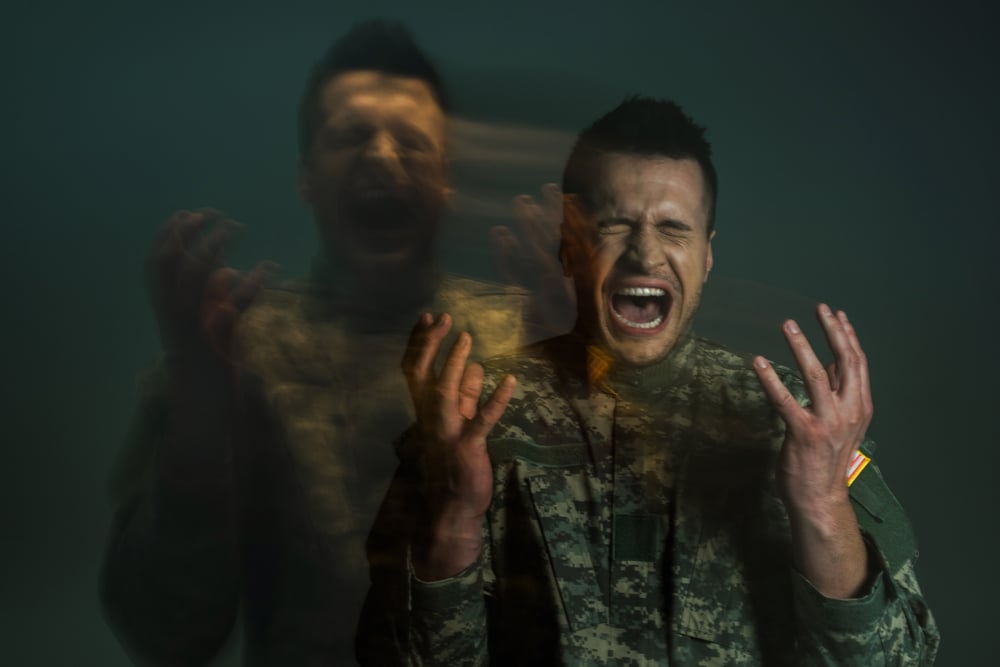
Các triệu chứng xuất hiện do PTSD có thể “nghiêm trọng và kéo dài và gây cản trở chức năng xã hội và/hoặc nghề nghiệp”.
The symptoms that arise because of PTSD can be “severe and prolonged and interfere with social and/or occupational functioning” (Muldoon et al., 2019, p. 315).
Khi ứng phó với PTSD, bệnh nhân cần phải xử lý lại sang chấn trong một môi trường an toàn. Họ cần tiết lộ sự ảnh hưởng của sang chấn lên họ.
In dealing with PTSD, the patient needs to reprocess the trauma in a safe environment. They require closure on how the trauma has affected them.
Rối loạn đặc biệt này là trải nghiệm căng thẳng từ sang chấn lặp đi lặp lại làm hình thành một hệ thống nỗi sợ có thể tách biệt với bối cảnh thực, bao gồm thời gian và địa điểm của mối nguy hiểm.
This unique disorder involves repeated experiences of traumatic stress that form a fear network that can separate contextual cues, including the time and location of the danger (Schauer & Elbert, 2015).
Khách hàng bị chẩn đoán mắc PTSD có thể hưởng lợi từ các kỹ thuật dưới đây, cũng như các trị liệu sang chấn đề cập bên dưới:
Clients who have been diagnosed with PTSD may benefit from the following techniques, as well as some of the later-mentioned trauma therapies:
Neo giữ giác quan. Sensory grounding
Để giúp khách hàng neo giữ bản thân và tăng nhận thức, hãy khuyến khích họ thử các phương pháp dưới đây:
To help them ground themself and bring awareness, encourage your client to try the following practice:
– Kể tên 5 thứ bạn có thể thấy, 4 thứ bạn có thể nghe, 3 thứ bạn có thể sờ, 2 thứ bạn có thể ngửi, và một thứ bạn có thể nếm.
Name five things you can see, four things you can hear, three things you can touch, two things you can smell, and one thing you can taste.

Họ cũng có thể mang theo một mùi hương giúp neo giữ, như một lọ nhũ tương có mùi, nước hoa, hoặc dầu thơm, hoặc mang theo một đồ vật giúp ổn định giác quan, như một đồ chơi hoặc một vật mềm. Những dụng cụ này có thể được dùng một cách kín đáo và mang lại hiệu quả sâu sắc.
They could also carry a grounding smell, such as a scented lotion, perfume, or cologne, or carry a grounding sensory object, such as a fidget or soft item. These grounding tools can be used discretely and have profound effects.
Neo giữ nhận thức. Cognitive grounding
Neo giữ nhận thức là một quá trình khi khách hàng phải cho chính họ thấy bản thân an toàn. Họ có thể nói ra bằng lời những suy nghĩ sau:
Cognitive grounding is a process where clients must show themselves that they are safe. They could verbally review the following thoughts:
– Nhắc nhở bản thân nơi sang chấn xuất hiện và khoảng cách thực tế giữa bạn và địa điểm đó. Remind yourself where the trauma occurred and how physically far you are from that location.
– Nhắc bản thân về thời điểm sang chấn xuất hiện và thời gian đã qua bao lâu rồi. Remind yourself when the trauma occurred and how long ago that was.
– Lặp lại các câu nói truyền cảm hứng như các câu sau đây: Repeat inspiring quotes say coping statements such as:
Mình có thể xử lý được chuyện này. I can handle this.
Những cảm giác này chỉ là nhất thời. These feelings are temporary.
Tình huống hiện tại đã khác rồi. My present situation is different.
Chữa lành sang chấn: 7 liệu pháp. Healing Trauma: 7 Therapies
Chẳng có gì đáng ngạc nhiên khi sang chấn có thể để lại những ảnh hưởng tai hại lên sức khỏe thể chất và tinh thần. Sang chấn có thể đến dưới nhiều hình thức và khác nhau tùy từng người. Điều quan trọng là bạn phải nhớ rằng sang chấn có thể truyền từ thế hệ này sang thế hệ khác.
It comes as no surprise that trauma can have deleterious effects on physical and mental health. Trauma comes in different forms and varies from person to person. It is also important to remember that trauma can be passed down through generations.
Liệu pháp trò chuyện (hay trò chuyện chữa lành – ND) là một trong những hình thức trị liệu phổ biến nhất; tuy nhiên, nếu việc nói ra sang chấn lợi bất cập hại thì bạn có thể tham khảo các lựa chọn khác.
Talk therapy is one of the most common trauma therapies; however, if verbalizing trauma seems more harmful than beneficial, there are other options.
Dẫu vậy, dưới đây là danh sách một và các biện pháp có thể giúp xử lý sang chấn.
Regardless, here is a non-exhaustive list of therapies that can address trauma.
Phản hồi thần kinh. Neurofeedback
Với mục tiêu tự điều tiết và điều chỉnh các dạng sóng não, phản hồi thần kinh là một kỹ thuật trị liệu sử dụng điện não đồ (EEG) để đo lường các dạng thức sóng não. Khách hàng sẽ nhận được phản hồi tức thì về hoạt động não bộ của mình.
With the goal of self-regulation and modification of brainwave patterns, neurofeedback is a therapeutic technique that uses electroencephalogram (EEG) to measure brainwave patterns. Clients receive immediate feedback about their brain activity.
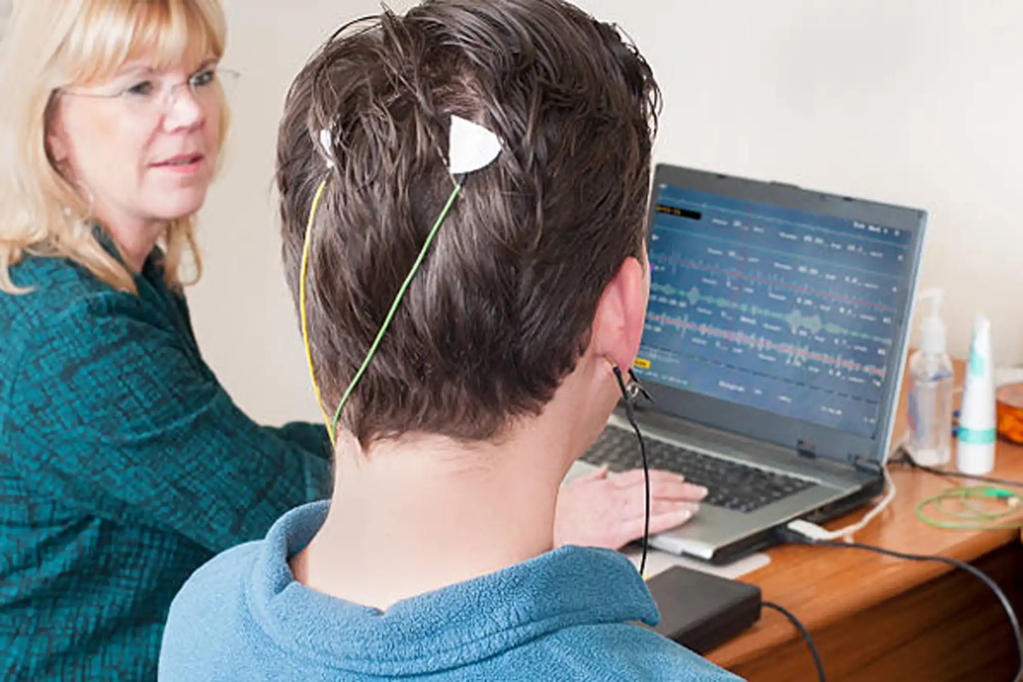
Nói kỹ hơn, phản hồi thần kinh EEG là một hình thức điều trị tiên tiến giúp giảm các triệu chứng PTSD bằng cách điều chỉnh hoạt động của não bộ. Phản hồi thần kinh sử dụng EEG là điều tiết hoạt động của não bằng cách điều chỉnh các băng tần EEG.
Taken a step further, electroencephalographic neurofeedback is a cutting-edge treatment that reduces symptoms of PTSD by also modulating brain activity (Askovic et al., 2023). Neurofeedback using EEG involves regulating brain activity by adjusting the EEG frequency bands.
Thông thường, chủ thể sẽ kiểm sát điện não đồ của họ thông qua các cơ chế phản hồi thị giác hoặc thính giác. Phản hồi thần kinh là kỹ thuật có lợi thế vì bệnh nhân không phải tái diễn các ký ức đau buồn có thể khiến họ kích động.
Typically, individuals exert control over their EEG patterns through visual or auditory feedback mechanisms. Neurofeedback techniques are advantageous because the patient doesn’t have to revisit painful memories that could be triggering.
Trị liệu nhận thức – hành vi tập trung vào sang chấn. Trauma-focused Cognitive-Behavioral Therapy
Trị liệu nhận thức – hành vi tập trung vào sang chấn như trị liệu nhận thức, liệu pháp xử lý nhận thức, và tiếp xúc kéo dài giúp điều trị hiệu quả sang chấn.
Trauma-focused Cognitive-Behavioral Therapy practices such as cognitive therapy, cognitive processing therapy, and prolonged exposure are effective in treating trauma (Murray et al., 2022).

Trong những liệu pháp này, khách hàng sẽ trao đổi về sang chấn của bản thân, và qua phối hợp với trị liệu viên, họ được yêu cầu hiểu rõ những ký ức này để chúng bớt ảnh hưởng lên họ.
In these therapies, the client talks about their trauma, and through the partnership with the therapist, they are tasked with making sense of the memories so they affect the client less.
Trị liệu nhận thức – hành vi tập trung vào sang chấn là một dạng trò chuyện chữa lành đã được chứng minh là can thiệp có lợi cho các phản ứng sang chấn, bao gồm PTSD.
Trauma-focused Cognitive-Behavioral Therapy is a type of talk therapy that has proven to be a beneficial intervention for trauma responses, including PTSD (Averill & Abdallah, 2022).
Nó cũng có thể được gọi là tư vấn, tâm lý trị liệu, hoặc đơn giản chỉ là trị liệu. Nó cũng là một trị liệu dựa trên giao tiếp nơi trị liệu viên trao đổi với khách hàng về sang chấn và lập ra một danh sách các chiến lược có thể áp dụng.
It can also be referred to as counseling, psychotherapy, or just therapy. It is a communication-based therapy where the therapist talks through the trauma with the client and creates a list of strategies to use.
Giải mẫn cảm chuyển động nhãn cầu và tái nhận thức. Eye movement desensitization and reprocessing (EMDR)
EMDR là tâm lý trị liệu hiệu quả không chỉ trong điều trị PTSD, mà còn cả các rối loạn tâm lý liên quan đến sang chấn khác nữa.
EMDR therapy is a psychotherapy that is effective in treating not only PTSD, but other trauma-related psychological disorders (Mazzoni et al., 2022; Poli et al., 2023).
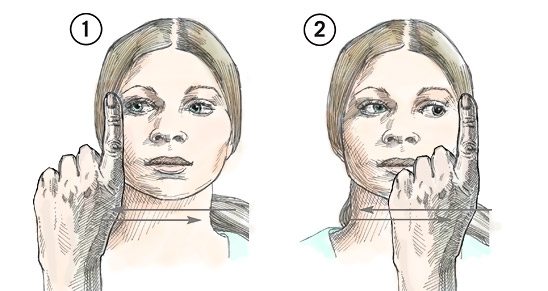
Khi áp dụng liệu pháp này, bệnh nhân sẽ giảm bớt sự sống động và cảm xúc của ký ức sang chấn bằng cách tập trung vào ký ức đó đồng thời trải nghiệm kích thích hai bên như chuyển động mắt, nhịp gõ và âm điệu.
In using this therapy, the patient reduces the vividness and emotion of the traumatic memory by focusing on that traumatic memory while simultaneously experiencing bilateral stimulation such as eye movements, tapping, or tones.
Tiếp xúc kéo dài. Prolonged exposure
Tiếp xúc kéo dài là dạng trị liệu nhận thức – hành vi dựa trên tiếp xúc với sang chấn, được chứng minh là giúp giảm bớt PTSD và các bệnh lý tâm thần liên quan.
Prolonged exposure (PE) is an exposure-based form of Cognitive-Behavioral Therapy that has been shown to reduce PTSD and related psychopathology (Powers et al., 2010; van Minnen et al., 2012).
Liệu pháp này cho phép khách hàng vượt qua các cơ chế dập tắt nỗi sợ bằng cách sử dụng một cách an toàn các kích thích có liên quan đến sang chấn, tiếp xúc tưởng tượng và xử lý các ký ức sang chấn mà không sợ phải tiếp nhận hậu quả.
PE allows the client to work through fear extinction mechanisms using safe trauma-related stimuli, imaginal exposure, and processing of trauma memories without feared outcomes (van Minnen et al., 2012).
Theo phương pháp này, khách hàng sẽ đối mặt với các ký ức, cảm giác liên quan đến sang chấn và những tình huống mà bình thường họ sẽ né tránh hoặc đè nén.
In this approach, the client confronts trauma-related memories, feelings, and situations that they have otherwise avoided or repressed.
Các kỹ thuật tự do cảm xúc. Emotional freedom techniques
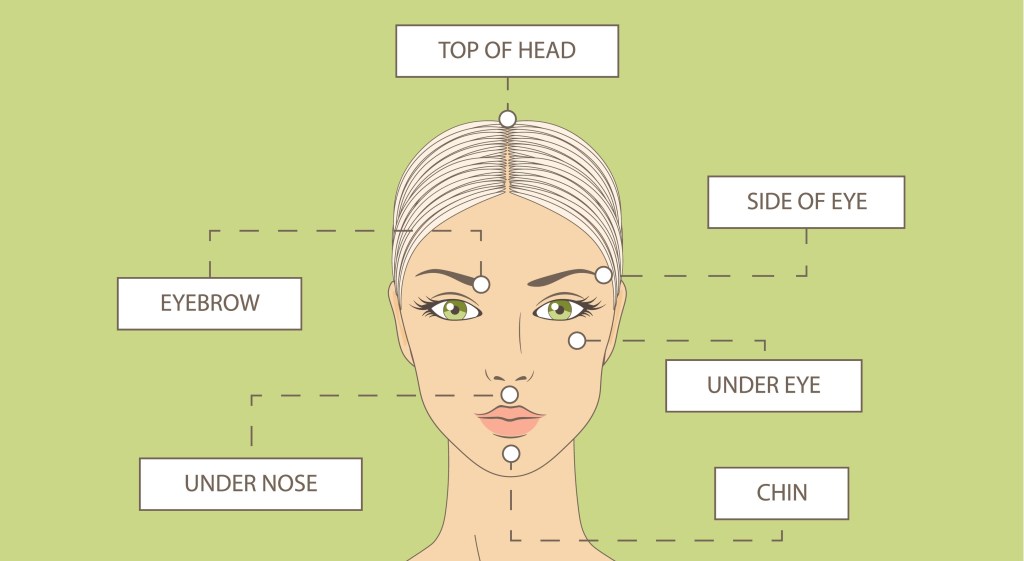
Kỹ thuật tự do cảm xúc đã được chứng minh điều trị hiệu quả nhiều bệnh tâm lý. Trong liệu pháp này, việc tiếp xúc với sang chấn được đi kèm với tác động vào các điểm châm cứu cụ thể.
Emotional freedom techniques (EFT) have been found to effectively treat psychological conditions (Fox, 2013). In this therapy, exposure to the trauma is paired with tapping specific acupuncture points.
Kỹ thuật này nằm trong nhóm trị liệu có tên gọi tâm lý học năng lượng. Nó đã được chứng minh là giúp cải thiện các bệnh lý như lo âu, trầm cảm, ám ảnh sợ và PTSD, cũng như các bệnh thể chất như đau cơ xơ hóa, vảy nến, đau đầu do căng thẳng, đau nhức, chấn thương sọ não, và các rối loạn co giật.
EFT tapping is among the group therapies called energy psychology. It has been shown to improve conditions such as anxiety, depression, phobias, and PTSD, as well as physical ailments such as fibromyalgia, psoriasis, tension headaches, pain, traumatic brain injury, and seizure disorders (Nelms & Castel, 2016).
Trong phương pháp này, những rào cản tinh thần chưa được giải quyết sẽ được giải phóng, giảm bớt tác động và cường độ của các sự kiện sang chấn trong quá khứ. Bao gồm hoạt động gõ nhẹ vào từng điểm trong 5 huyệt đạo từ 5 đến 7 lần đồng thời tập trung vào cảm xúc tiêu cực.
In this practice, unresolved emotional barriers are released, reducing the impact and intensity of past traumatic events. It involves tapping each of the five meridian points five to seven times while focusing on the negative emotion.
Liệu pháp thân nghiệm (trải nghiệm thân thể). Somatic experiencing therapy
Thân nghiệm là một phương pháp trị liệu hướng vào cơ thể, tập trung vào những hệ quả tâm sinh lý của sự kiện sang chấn và có thể có tác động tích cực lên các triệu chứng PTSD. Trong hình thức can thiệp này, khách hàng sẽ tập trung vào phản ứng của cơ thể với căng thẳng và tái thiết lập hệ thần kinh về lại trạng thái cân bằng khỏe mạnh.
Somatic experiencing is a body-oriented therapeutic approach that focuses on the psychophysiological consequences of the event and can have positive effects on PTSD-related symptoms (Kuhfuß et al., 2021). In this intervention, clients focus on their body’s response to stress and restoring their nervous system back to a state of healthy balance.
Nguyên tắc cơ bản của liệu pháp này là xử lý từ dưới lên, và khách hàng sẽ đưa ý thức đến với những trải nghiệm nội cảm, vận động và cảm thụ bản thể (khả năng của cơ thể nhận thức được vị trí và chuyển động của chính nó – ND).
The premise of this therapy is bottom-up processing, and the client brings awareness to their interoceptive, kinesthetic, and proprioceptive experiences (Brom et al., 2017).
Liệu pháp hệ gia đình nội tâm. Internal Family Systems Therapy
Đây là một hình thức tâm lý trị liệu được biết đến nhiều nhất trong chữa trị các rối loạn khí sắc, rối loạn ăn uống và rối loạn nhân cách.
Internal Family Systems (IFS) Therapy is a type of psychotherapy most notable for treating mood disorders, eating disorders, and personality disorders (Lester, 2017).
Vận hành theo nguyên tắc cơ bản cho rằng tâm trí được tạo nên từ các bộ phận chứ không phải một thể đơn lẻ, phương pháp dựa trên nghiên cứu này giúp xử lý các tiểu hoặc hệ nhóm tính cách. Phương pháp này xử lý những nhóm nhỏ nhân cách để tập trung tái thiết lập sự hòa hợp và cân bằng, căn chỉnh nó cho khớp với các con người cốt lõi của khách hàng.
Working under the premise that the mind is made up of parts and not a single entity, this research-based approach addresses sub-personalities or families. IFS Therapy addresses these sub-personalities to focus on restoring harmony and balance, aligning them with the client’s core self.
Thông điệp cuối. A Take-Home Message
Việc hiểu rõ các phản ứng sang chấn giúp ta hỗ trợ khách hàng xác định các hành vi phản ứng của họ với sang chấn và chấm dứt chúng, cho phép họ sống tốt hơn và thực sự hạnh phúc.
Understanding trauma responses enables us to help our clients identify their behavioral reactions to trauma and shut them down, allowing them to live more productive lives and truly flourish.
Nếu một khách hàng nhận ra được phản ứng sang chấn của họ, họ sẽ có thể không chỉ hạn chế hành vi này mà còn biết yêu thương bản thân họ nhiều hơn. Họ học cách quan sát hành vi, từ đó họ sẽ thông suốt. Họ bắt đầu hiểu được rằng đôi khi – những hành vi kỳ quặc này được tạo ra để bảo vệ họ. Biết được điều này, khách hàng có thể cho bản thân nhiều sự khoan dung và tử tế hơn.
If a client recognizes their trauma response, they will be empowered to not only mitigate the behavior, but will also have more compassion toward themselves. They learn to observe the behavior, which provides clarity. They begin to understand that these sometimes-quirky behaviors are designed to protect them. Knowing this, clients can allow themselves more grace and kindness.
Phản ứng sang chấn là dụng cụ đo mức độ nguy hiểm tiềm ẩn. Nếu một người nhạy cảm với nguy hiểm, họ sẽ có lợi thế sinh tồn. Mặt khác, người nhạy quá với nguy hiểm cũng khó mà sống một cuộc sống đủ đầy được.
Trauma responses are a thermostat for potential danger. If an individual is sensitive to danger, they will have the advantage to survive. On the other hand, individuals sensitive to danger may also have difficulty leading a fulfilling life.
Câu hỏi thường gặp. Frequently Asked Questions
Điều gì châm ngòi một phản ứng sang chấn? What triggers a trauma response?
Có rất nhiều yếu tố châm ngòi cho một phản ứng sang chấn; tuy nhiên, ở cấp độ cơ bản nhất, một mối đe dọa ta nhận biết được hoặc một ký ức trong vô thức về một sự kiện sang chấn có thể gây ra một phản ứng sang chấn. Các ký ức vô thức có thể là một thời điểm cụ thể trong ngày, một mùi, vị, hoặc bất cứ thứ gì hoặc bất cứ ai nhắc bạn nhờ về sang chấn đó.
There are countless triggers to a trauma response; however, at the most basic level, a perceived threat or an unconscious memory of a traumatic event could elicit a trauma response. Unconscious memories may include a specific time of day, smell, taste, or anything or anyone who reminds the individual of the trauma.
Sang chấn có thể thay đổi tính cách của bạn không? Can trauma change your personality?
Các phản ứng sang chấn có thể bị nhầm với các đặc trưng tính cách. Khi phản ứng sang chấn xuất hiện quá thường xuyên, mọi người có thể coi nó là tính cách thật của bạn, trong khi thực tế chúng là những phản ứng bẩm sinh khi trải nghiệm sang chấn.
Trauma responses can be confused with personality traits. When your trauma responses are frequent, others may perceive this is your actual personality, when in reality they are your innate responses to a trauma experienced.

Cạn kiệt lòng trắc ẩn có phải một phản ứng sang chấn? Is compassion fatigue a trauma response?
Đúng, cạn kiệt lòng trắc ẩn có thể cũng được coi là một phản ứng với sang chấn thứ cấp.
Yes, compassion fatigue can also be considered a trauma response to secondary trauma.
Tham khảo. References
American Psychiatric Association. (2013). Diagnostic and statistical manual of mental disorders (5th ed.).
Askovic, M., Soh, N., Elhindi, J., & Harris, A. W. (2023). Neurofeedback for post-traumatic stress disorder: Systematic review and meta-analysis of clinical and neurophysiological outcomes. European Journal of Psychotraumatology, 14(2). https://doi.org/10.1080/20008066.2023.2257435
Averill, L. A., & Abdallah, C. G. (2022). Investigational drugs for assisting psychotherapy for posttraumatic stress disorder (PTSD): Emerging approaches and shifting paradigms in the era of psychedelic medicine. Expert Opinion on Investigational Drugs, 31(2), 133–137. https://doi.org/10.1080/13543784.2022.2035358
Bailey, R., Dugard, J., Smith, S. F., & Porges, S. W. (2023). Appeasement: Replacing Stockholm syndrome as a definition of a survival strategy. European Journal of Psychotraumatology, 14(1). https://doi.org/10.1080/20008066.2022.2161038
Baldwin, D. V. (2013). Primitive mechanisms of trauma response: An evolutionary perspective on trauma-related disorders. Neuroscience & Biobehavioral Reviews, 37(8), 1549–1566. https://doi.org/10.1016/j.neubiorev.2013.06.004
Bracha, H. S. (2004). Freeze, flight, fight, fright, faint: Adaptationist perspectives on the acute stress response spectrum. CNS Spectrums, 9(9), 679–685. https://doi.org/10.1017/S1092852900001954
Brom, D., Stokar, Y., Lawi, C., Nuriel‐Porat, V., Ziv, Y., Lerner, K., & Ross, G. (2017). Somatic experiencing for posttraumatic stress disorder: A randomized controlled outcome study. Journal of Traumatic Stress, 30(3), 304–312. https://doi.org/10.1002/jts.22189
d’Andrea, W., Pole, N., DePierro, J., Freed, S., & Wallace, D. B. (2013). Heterogeneity of defensive responses after exposure to trauma: Blunted autonomic reactivity in response to startling sounds. International Journal of Psychophysiology, 90(1), 80–89. https://doi.org/10.1016/j.ijpsycho.2013.07.008
Fox, L. (2013). Is acupoint tapping an active ingredient or an inert placebo in emotional freedom techniques (EFT)? A randomized controlled dismantling study. Energy Psychology: Theory, Research and Treatment Journal, 5(2), 15–28.
Germer, C. K., & Neff, K. D. (2015). Cultivating self-compassion in trauma survivors. In V. M. Follette, J. Briere, D. Rozelle, J. W. Hopper, & D. I. Rome (Eds.), Mindfulness-oriented interventions for trauma: Integrating contemplative practices (pp. 43–58). Guilford Press.
Katz, C., Tsur, N., Talmon, A., & Nicolet, R. (2021). Beyond fight, flight, and freeze: Towards a new conceptualization of peritraumatic responses to child sexual abuse based on retrospective accounts of adult survivors. Child Abuse & Neglect, 112. https://doi.org/10.1016/j.chiabu.2020.104905
Kim, Y. K., Yun, P. Y., Ahn, M. S., & Kim, J. S. (2009). The relationship between trauma and temporomandibular joint disorder. Maxillofacial Plastic and Reconstructive Surgery, 31(5), 375-380.
Kozlowska, K., Walker, P., McLean, L., & Carrive, P. (2015). Fear and the defense cascade: Clinical implications and management. Harvard Review of Psychiatry, 23(4), 263. https://doi.org/10.1097/hrp.0000000000000065
Kuhfuß, M., Maldei, T., Hetmanek, A., & Baumann, N. (2021). Somatic experiencing–Effectiveness and key factors of a body-oriented trauma therapy: A scoping literature review. European Journal of Psychotraumatology, 12(1). https://doi.org/10.1080/20008198.2021.1929023
Lester, R. J. (2017). Self‐governance, psychotherapy, and the subject of managed care: Internal family systems therapy and the multiple self in a US eating‐disorders treatment center. American Ethnologist, 44(1), 23–35. https://doi.org/10.1111/amet.12423
Mazzoni, G. P., Miglietta, E., Ciull, T., Rotundo, L., Pozza, A., Gonzalez, A., & Fernandez, I. (2022). Group eye movement desensitization reprocessing (EMDR) psychotherapy and recurrent interpersonal traumatic episodes: a pilot follow-up study. Clinical Neuropsychiatry, 19(6), 379–389. https://doi.org/10.36131/cnfioritieditore20220605
McCarty, R. (2016). The fight-or-flight response: A cornerstone of stress research. In G. Fink (Ed.), Stress: Concepts, cognition, emotion, and behavior (pp. 33-37). Academic Press.
Muldoon, O. T., Haslam, S. A., Haslam, C., Cruwys, T., Kearns, M., & Jetten, J. (2019). The social psychology of responses to trauma: Social identity pathways associated with divergent traumatic responses. European Review of Social Psychology, 30(1), 311–348. https://doi.org/10.1080/10463283.2020.1711628
Murray, H., Grey, N., Warnock-Parkes, E., Kerr, A., Wild, J., Clark, D. M., & Ehlers, A. (2022). Ten misconceptions about trauma-focused CBT for PTSD. The Cognitive Behaviour Therapist, 15. https://doi.org/10.1017/S1754470X22000307
Nelms, J. A., & Castel, L. (2016). A systematic review and meta-analysis of randomized and nonrandomized trials of clinical emotional freedom techniques (EFT) for the treatment of depression. Explore, 12(6), 416–426. https://doi.org/10.1016/j.explore.2016.08.001
Poli, A., Cappellini, F., Sala, J., & Miccoli, M. (2023). The integrative process promoted by EMDR in dissociative disorders: neurobiological mechanisms, psychometric tools and intervention efficacy on the psychological impact of COVID19 pandemic. Frontiers in Psychology, 14. https://doi.org/10.3389/fpsyg.2023.1164527
Powers, M. B., Halpern, J. M., Ferenschak, M. P., Gillihan, S. J., & Foa, E. B. (2010). A meta-analytic review of prolonged exposure for posttraumatic stress disorder. Clinical Psychology Review, 30(6), 635–641. https://doi.org/10.1016/j.cpr.2010.04.007
Rodriguez-Quiroga, A., MacDowell, K. S., Leza, J. C., Carrasco, J. L., & Díaz-Marsá, M. (2021). Childhood trauma determines different clinical and biological manifestations in patients with eating disorders. Eating and Weight Disorders – Studies on Anorexia, Bulimia and Obesity, 26, 847–857. https://doi.org/10.1007/s40519-020-00922-7
Schauer, M., & Elbert, T. (2015). Dissociation following traumatic stress. Zeitschrift für Psychologie/Journal of Psychology. https://doi.org/10.1027/0044-3409/a000018
Shabahang, R., Shim, H., Aruguete, M. S., & Zsila, A. (2022). Oversharing on social media: Anxiety, attention-seeking, and social media addiction predict the breadth and depth of sharing. Psychological Reports. https://doi.org/10.1177/00332941221122861
van Minnen, A., Harned, M. S., Zoellner, L., & Mills, K. (2012). Examining potential contraindications for prolonged exposure therapy for PTSD. European Journal of Psychotraumatology, 3(1). https://doi.org/10.3402/ejpt.v3i0.18805
Walker, P. (2013). Complex PTSD: From surviving to thriving: A guide and map for recovering from childhood trauma. Azure Coyote.
Author: Tiffany Sauber Millacci, Ph.D.
Nguồn: https://positivepsychology.com/trauma-response/
Như Trang
 Exploring Psychology - Khám Phá Tâm Lý Học