
Từng một thời được coi là hướng điều trị đột phá cho các vấn đề sức khỏe tâm thần, phẫu thuật cắt thùy não (lobotomy) hiện là một trong những thủ thuật gây tranh cãi và ám ảnh nhất trong lịch sử y học.
Once viewed as a groundbreaking treatment for mental health problems, lobotomies now stand as one of the most controversial and haunting procedures in medical history.

Lobotomy là gì? What Is a Lobotomy?
Lobotomy là một phẫu thuật cắt đứt các đường dẫn thần kinh ở vỏ não trước trán. Thủ thuật này nhằm mục đích hỗ trợ người mắc bệnh lý tâm thần kinh, nhưng có thể tiềm ẩn rủi ro nghiêm trọng và kết quả không mong muốn.
A lobotomy is a surgical procedure that involves severing the nerve pathways in the prefrontal cortex. The procedure is intended to help with psychiatric and neurological conditions, but it can have serious risks and unwanted outcomes.
Trong những năm giữa thế kỷ 20, phẫu thuật cắt thùy não là một phương án điều trị phổ biến dành cho các bệnh lý tâm thần. Là một phần của làn sóng mới trong điều trị các bệnh thần kinh, bao gồm cả liệu pháp sốc điện (ECT).
In the mid-20th century, lobotomy was a popular “cure” for mental illness. It was part of a new wave of treatments for neurological diseases, including electroconvulsive therapy (ECT).
Phẫu thuật cắt thùy não thường được thực hiện ở những người mắc ba bệnh lý dưới đây:
Lobotomies were typically performed on people with the following three conditions:
– Rối loạn trầm cảm điển hình kèm ý định tự sát. Major depressive disorder (MDD) with suicidal ideation
– Rối loạn ám ảnh – cưỡng chế (OCD). Obsessive-compulsive disorder (OCD)
– Tâm thần phân liệt. Schizophrenia

Phẫu thuật này nhằm mục đích cắt đứt các bó sợi thần kinh kết nối thùy trán, là khu vực phối hợp với các vùng khác, chịu trách nhiệm cho hoạt động tư duy. Mặc dù một số người cho rằng đây là hình thức điều trị nhanh cho các triệu chứng tâm thần nặng, nhưng sau rồi người ta cũng sớm hiểu ra thủ thuật này thường đưa đến những ảnh hưởng nghiêm trọng và không thể cứu vãn.
This procedure aimed to sever nerve fibers in the brain that connect the frontal lobe, the area responsible for thinking, with other regions. While some saw it as a quick “cure” for serious mental health symptoms, it was soon clear that it often resulted in devastating and irreversible effects.
Lược sử. History of Lobotomy as a Treatment
Lịch sử phẫu thuật cắt thùy não phản ánh rất nhiều điều về sự tiến hóa của các hình thức điều trị bệnh tâm thần. Được giới thiệu lần đầu trong những năm 1930. Thủ thuật này được coi là một bước tiến lớn hướng đến điều trị các triệu chứng tâm thần, đặc biệt là ở những người bị hạn chế các lựa chọn khác.
The history of lobotomy reflects much about the evolution of psychiatric treatments for mental illness. Originally introduced during the 1930s, the procedure was seen as a huge step forward in the treatment of psychiatric symptoms, particularly for those who had few other options.
Thủ thuật này ngày càng phổ biến, nhưng rốt cuộc lại suy yếu khi những hậu quả của nó trở nên quá rõ ràng. Việc hiểu được lịch sử của thủ thuật này và các dạng phẫu thuật cắt thùy não chính trong suốt những năm giữa thế kỷ 20 sẽ mang đến một bối cảnh giúp giải thích tại sao người ta không còn ưa thích thủ thuật này nữa.
The procedure grew in popularity, but eventually declined as the consequences became more apparent. Understanding the history of the procedure and the prominent types of lobotomies practiced during the mid-20th century offers context for why the lobotomy eventually fell from favor.
Phẫu thuật cắt thùy não của Egas Moniz. Egas Moniz’s “Leucotomy”
Ca phẫu thuật cắt thùy não đầu tiên được thực hiện vào năm 1935 bởi bác sĩ thần kinh người Bồ Đào Nha tên Antonio Egas Moniz. Phương pháp ban đầu ông sử dụng là khoan nhiều lỗ trên hộp sọ và bơm cồn tinh khiết vào vỏ não trước trán, về cơ bản là làm phá hủy mô não.
The world’s first lobotomy was performed in 1935 by a Portuguese neurologist by the name of António Egas Moniz. His original method involved drilling holes into the skull and pumping absolute alcohol into the frontal cortex, essentially destroying brain tissue.
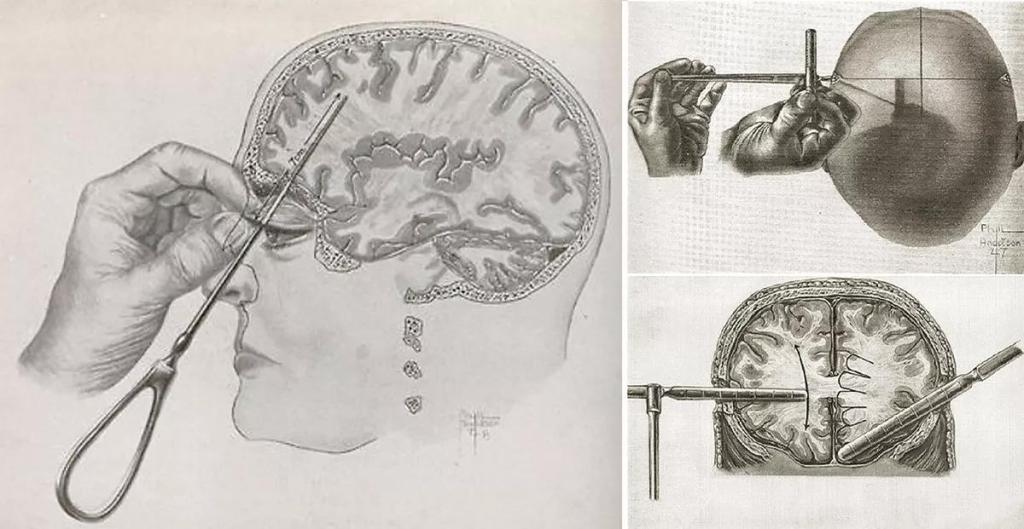
Phẫu thuật được cho là thành công. The operation was deemed a success.
Ông nghĩ rằng việc phá hủy kết nối giữa thùy não trước và các bộ phận khác của não, sẽ chấm dứt hành vi “bất thường” và các suy nghĩ không tốt.
He thought that damaging the connection between the front of the brain and other parts of the brain, would stop “abnormal” behaviors and distressing thoughts.
Sau này, Moniz bắt đầu sử dụng một công cụ tự thiết kế, gọi là leucotome, để loại bỏ các khối mô của thùy trán.
Later, Moniz began to use an instrument of his own design, called a leucotome, to remove chunks of tissue from the frontal lobes.
Moniz được trao giải Nobel Sinh lý học hay Y học vào năm 1949 cho phát hiện của ông về phẫu thuật cắt thùy não trước trán, coi đó như một liệu pháp triệt để cho các rối loạn tâm thần.
Moniz was awarded the 1949 Nobel Prize for Physiology or Medicine for his discovery of the prefrontal lobotomy as a radical therapy for mental disorders.1
Phẫu thuật cắt thùy não sử dụng dùi đá. The “Ice Pick” Lobotomy
Trong vòng một năm sau phẫu thuật của Moniz, bác sĩ thần kinh Walter Freeman và bác sĩ phẫu thuật thần kinh James Watts thực hiện ca phẫu thuật cắt thùy não trước đầu tiên tại Hoa Kỳ. Mặc dù Freeman thấy phẫu thuật này rất tuyệt vời nhưng ông còn muốn xây dựng một quy trình thậm chí còn nhanh hơn, hiệu quả hơn và đòi hỏi ít tài nguyên và công cụ chuyên dụng hơn.
Within a year of Moniz’s procedure, neurologist Walter Freeman and neurosurgeon James Watts performed the first prefrontal lobotomy in the United States.2 Although Freeman found this procedure great, he wanted to develop a procedure that would be faster, more effective, and require fewer resources and specialized tools.

Tuy nhiên, Freeman muốn phẫu thuật cắt thùy não trở nên chính thống hơn. Vậy nên, vào năm 1946 – 10 năm sau ca phẫu thuật cắt bỏ thùy não đầu tiên tại Hoa Kỳ – Freeman đã xây dựng một phương pháp mới có tên là phẫu thuật cắt thùy não xuyên ổ mắt.
However, Freeman wanted lobotomies to be a more streamlined process. So, in 1946—10 years after performing his first lobotomy in the U.S.—Freeman developed a new method called the transorbital lobotomy.
Thay vì khoan vào hộp sọ để cắt đứt các kết nối trong thùy trán, Freeman sử dụng một chiếc búa để xuyên một chiếc dùi đá vào não bệnh nhân qua hốc mắt.
Instead of drilling into the skull to sever the connections in the frontal lobes, Freeman used a hammer to drive an ice pick into his patients’ brains through their eye sockets.
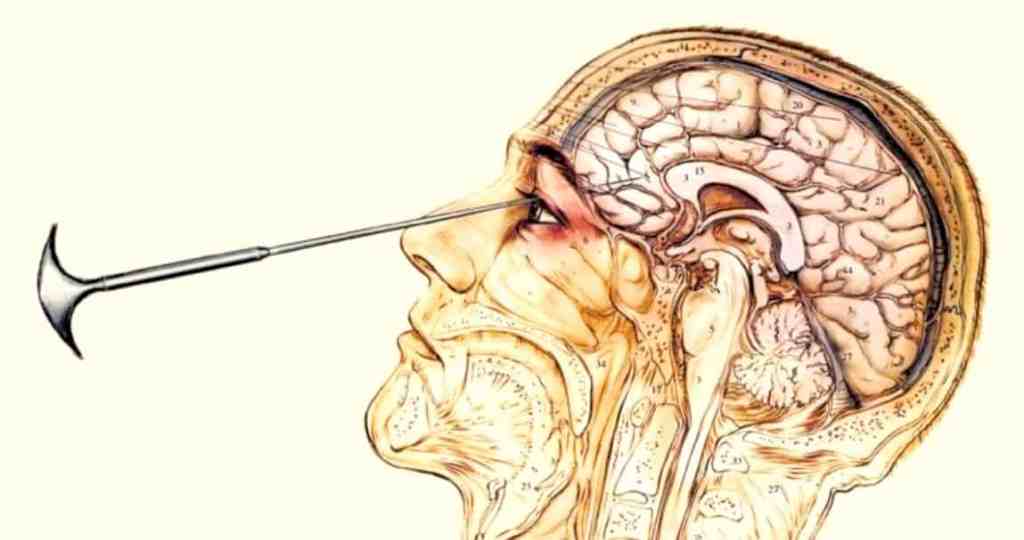
Một khi dùi đá đã được xuyên vào bên trong, ông lay qua lay lại nó để làm đứt các dây thần kinh kết nối vỏ não trước trán và đồi thị. Phẫu thuật nào sau này còn được biết đến là “phẫu thuật cắt thùy não dùng dùi đá.”
Once the ice pick was inside, he literally wiggled it around, severing the nerves connecting the prefrontal cortex to the thalamus. This adapted procedure became known as an “ice pick lobotomy.”
Mặc dù phẫu thuật cắt thùy não xuyên ổ mắt được thực hiện bằng dùi đá, nhưng Freeman sau này đã tự sáng tạo ra dụng cụ của riêng mình dựa trên thiết kế của dùi đá – dùi xuyên hốc mắt.
Though his first transorbital lobotomy was done with an ice pick, Freeman later made his own instrument based on the ice picks design—the orbitoclast.
Mặc dù phẫu thuật cắt bỏ thùy não thường kéo dài hơn 1 tiếng nhưng phẫu thuật cắt thùy não xuyên hốc mắt của Freeman có thể được thực hiện chỉ trong 10 phút hoặc nhanh hơn – bệnh nhân bị làm ngất trước phẫu thuật sử dụng liệu pháp sốc điện – có thể được thực hiện bên ngoài bệnh viện.
While the prefrontal lobotomy took over an hour, Freeman’s transorbital lobotomy could be done in 10 minutes or less. Because it didn’t require anesthesia—patients were knocked out before the operation using ECT—it could be performed outside of the hospital.
Trong năm 1942, Freeman và Watts ghi nhận trong 200 người được điều trị bằng phẫu thuật cắt bỏ thùy não ở thời điểm đó, 63% cải thiện, 23% không thấy thay đổi, và 14% chết hoặc gặp biến chứng nghiêm trọng.
In 1942, Freeman and Watts wrote that of the 200 people they had treated at the time with lobotomies, 63% had improved, 23% saw no change, and 14% died or had severe complications.2
Hình thức này phổ biến đến thế nào? How Common Were They?
Ngày sau khi thực hiện ca phẫu thuật cắt thùy não bằng dùi đá, Freeman bắt đầu đi khắp đất nước để thực hiện phẫu thuật này cho những ai sẵn lòng.
Shortly after doing his first ice pick lobotomy, Freeman began traveling the country performing lobotomies on all who were willing.
Mặc dù phẫu thuật cắt thùy não ban đầu chỉ được sử dụng để điều trị các bệnh lý tâm thần nặng, nhưng Freeman bắt đầu quảng bá phẫu thuật này như một hình thức chữa khỏi cho mọi vấn đề từ bệnh tâm thần đến chứng khó tiêu tâm thần.
Though lobotomies were initially only used to treat severe mental health conditions, Freeman began promoting the lobotomy as a cure for everything from serious mental illness to nervous indigestion.
Có khoảng 50.000 người tiếp nhận hình thức phẫu thuật này tại Hoa Kỳ, hầu hết đều trong khoảng từ 1949 đến 1952. Bản thân Freeman cũng được ghi nhận là đã thực hiện phẫu thuật này trên khoảng 3500 bệnh nhân, bao gồm 19 trẻ em. Trẻ nhỏ nhất mới chỉ 4 tuổi.
About 50,000 people received lobotomies in the United States, most of them between 1949 and 1952.3 Freeman himself is said to have performed about 3,500 patients, including 19 children. The youngest was just four years old.4
Hiệu quả. What Were the Effects?
Những điều xảy đến sau phẫu thuật cắt thùy não ở mỗi người khác nhau rất nhiều. Mặc dù ý định là để giảm các triệu chứng tâm thần và cải thiện chức năng, nhưng thủ thuật này không phải lúc nào cũng mang đến hiệu quả như vậy. Những hiệu quả như thế này dao động từ thay đổi nhẹ trong tính cách đến tổn hại nhận thức và cảm xúc nghiêm trọng.
What happens to a person after a lobotomy varies considerably. While the intention was to reduce mental health symptoms and improve functioning, the procedure did not always produce such effects. Such effects ranged from subtle changes in personality to severe cognitive and emotional impairments.
Những người lúc đầu ủng hộ cho rằng thủ thuật này giúp người hay cáu bực bình tĩnh hơn. Tuy nhiên, ảnh hưởng lâu dài lại là một câu chuyện khác, rắc rối hơn nhiều. Nhiều người sau phẫu thuật bị suy giảm chức năng thần kinh, trơ lì cảm xúc, và khó sống tự lập.
Early proponents often suggested that the procedure helped calm severely agitated people. However, the long-term effects told a different, much more troubling story. Many were left with reduced mental function, flat emotions, and difficulty living independently.5

Một số người thực sự có cải thiện và sống tiếp một đời sống khá độc lập. Tuy nhiên, nhiều người khác thường gặp phải những tác động như thay đổi hành vi đột ngột, tâm trạng có vấn đề, và thiếu kiểm soát ham muốn.
Some people did improve and could go on and live relatively independent lives. However, others often experienced effects such as sudden changes in behavior, problems with mood, and a lack of impulse control.
Ở những trường hợp khác, có người bị mất chức năng và bị trơ lì cảm xúc, vô cảm. Một số người sau phẫu thuật bị rối loạn thần kinh vận động. Một số trường hợp phẫu thuật này còn gây chết người.
In other instances, people lost functioning and became emotionally numb and apathetic. Some people who were lobotomized became catatonic following the procedure. Lobotomies were also fatal in some cases.
Những rủi ro nghiêm trọng khác bao gồm: Other serious risks included:
– Nhiễm trùng não. Brain infections
– Thay đổi năng lực ngôn ngữ. Changes in language abilities
– Tổn hại nhận thức. Cognitive impairment
– Tiểu điện và đại tiện mất kiểm soát. Loss of bladder and bowel control
– Suy yếu cơ. Muscle weakness
– tính cách thay đổi. Personality changes
Như những gì ta cảm nhận về phẫu thuật, một số người có ghi nhận các cơn đau nghiêm trọng, trong khi những người khác lại không hề có ký ức gì về phẫu thuật cả.
As for what the procedure felt like, some reported experiencing severe pain,6 while others reported having no memory of the procedure at all.7
Các ca phẫu thuật cắt thùy não đáng lưu ý. Notable Lobotomies
Freeman cho biết mình cảm thấy phẫu thuật cắt thùy não “chỉ nguy hiểm hơn phẫu thuật loại bỏ răng bị viêm hơn một chút thôi.” Không may thay, đây không phải cái ta thấy ở phần đông các bệnh nhân. Trong nhiều ca, phẫu thuật cắt thùy não để lại tác động bất lợi lên tính cách, tính chủ động, khả năng ức chế, sự thấu cảm và khả năng vận hành đời sống của người bệnh.
Freeman reportedly felt that the lobotomy was “only a little more dangerous than an operation to remove an infected tooth.”8 Unfortunately, this was not the case for the majority of patients. In many instances, lobotomies had adverse effects on a patient’s personality, initiative, inhibitions, empathy, and ability to function on their own.9
Dưới đây là một số người đã trải qua phẫu thuật cắt thùy não và tác động của phẫu thuật lên đời sống của họ.
Here are a few people who underwent lobotomies and the impact the operation had on their lives.
Alice Hood Hammatt
Freeman và Watts thực hiện ca phẫu thuật cắt thùy não đầu tiên tại Hoa Kỳ trên bệnh nhân Alice Hood Hammatt, một phụ nữ được chẩn đoán mắc trầm cảm kèm hành vi hung dữ. Khi Hammatt thức dậy sau phẫu thuật, cô cho hay mình “rất vui.”
Freeman and Watts performed the first lobotomy in the U.S. on Alice Hood Hammatt, a woman diagnosed with agitated depression. When Hammatt awoke postoperatively, she stated that she was “happy.”
Sáu ngày sau phẫu thuật, Hammatt gặp phải những khó khăn tạm thời về ngôn ngữ, bị mất phương hướng, và hay cáu bực. Tuy nhiên, Freeman tin rằng kết quả của phẫu thuật là thành công.
Six days after the operation, Hammatt experienced transient language difficulties, disorientation, and agitation. Nevertheless, Freeman believed that the outcome of her procedure was a success.2
Rosemary Kennedy
Có lẽ người đáng lưu ý nhất đã từng trải qua phẫu thuật cắt thùy não chính là Rosemary Kennedy, chị gái của tổng thống Hoa Kỳ John F. Kennedy.
Probably the most notable person to have undergone a lobotomy is Rosemary Kennedy, sister of U.S. President John F. Kennedy.
Từ khi là một cô bé và thiếu nữ, Kennedy đã gặp phải tình trạng chậm phát triển nhẹ làm tổn hại đến năng lực học tập ở trường. Khi Rosemary lớn lên, cô ghi nhận bắt đầu có tình trạng co giật dữ dội và hay nổi cơn thịnh nộ, thường xuyên gây hấn với những người xung quanh.
As a child and young adult, Kennedy had mild developmental delays that impaired her performance in school. As Rosemary got older, she reportedly began to experience violent seizures and temper tantrums, lashing out at those around her.

Việc tìm kiếm một hình thức điều trị để xóa bỏ những cơn thịnh nộ và chính cảm giác sợ hãi rằng hành vi của Rosemary có thể gây tiếng xấu cho bản thân và cả gia đình, cha của Rosemary đã sắp xếp một cuộc phẫu thuật cắt thùy não khi cô 23 tuổi.
Seeking a treatment to ease her outbursts and fearing that Rosemary’s behavior would create a bad reputation for herself and the whole family, Rosemary’s father arranged a lobotomy for Rosemary when she was 23 years old.
Xuyên suốt toàn bộ quá trình, Rosemary được cho là vẫn tỉnh, nói chuyện với bác sĩ, và ngâm thơ cho y tá nghe. Bác sĩ biết phẫu thuật đã xong khi cô ngừng nói.
Throughout the entire procedure, Rosemary is said to have been awake, speaking with doctors, and reciting poems to nurses. Doctors knew the procedure was over when she stopped speaking.
Sau phẫu thuật, cô trở nên cực kỳ khuyết tật. Không thể vận hành một cách độc lập, và phải nhập viện cho đến cuối đời.
Following the procedure, she became severely disabled. She was unable to function independently, and was institutionalized for the remainder of her life.10
Tại sao lại thực hiện phẫu thuật cắt thùy não? Why Were Lobotomies Performed?
Phẫu thuật cắt thùy não được coi là một trong những hình thức điều trị man rợ nhất lịch sử y học hiện đại. Ngay cả đến những năm 1940, phẫu thuật cắt thùy não vẫn là đề tài gây tranh cãi. Nhưng mặc cho vấn đề y đức liên quan, nó vẫn được phổ biến rộng rãi vì nhiều lý do:
The lobotomy is considered one of the most barbaric treatments in the history of modern medicine. Even in the 1940s, lobotomies were the subject of growing controversy. But despite its ethical issues regarding the procedure, it gained widespread popularity for several reasons:
– Thiếu vắng các hình thức điều trị hiệu quả: Thuốc chống loạn thần mãi đến những năm 1950 mới xuất hiện. Mọi người đều muốn phải làm gì đó, bất kỳ là điều gì để giúp những người mắc các bệnh tâm thần nặng.
Absence of effective treatments: Antipsychotic drugs were not available until the mid-1950s. was available. People were desperate to do something, anything to help those with severe mental illness.
– Các bệnh viện tâm thần quá tải: Trong suốt những năm 1930, cứ 300 người Mỹ thì có 1 người phải nhập viện tâm thần. Phẫu thuật cắt thùy não được sử dụng để làm bình ổn những bệnh nhân ngỗ ngược và giúp dễ kiểm soát họ hơn.
Overcrowded institutions: During the 1930s, approximately 1 in every 300 Americans was institutionalized in a psychiatric hospital.11 Lobotomies were used to calm unruly patients and make them easier to manage.
– Truyền thông: Ở thời điểm này, truyền thông có đã có thể ảnh hưởng lên các chỉ định phẫu thuật. Một bài viết trên báo đã ca ngợi thủ thuật này “là một trong những cải tiến vĩ đại nhất của thế hệ.”
Media: At this time, the media was able to influence surgical indications. One newspaper article hailed the procedure as constituting “one of the greatest innovations of this generation.”2
Hiện phẫu thuật này vẫn được thực hiện? Are Lobotomies Still Performed?
Việc thực hiện các ca phẫu thuật cắt thùy não để can thiệp các rối loạn tâm thần đã bắt đầu lắng xuống vào những năm giữa thập niên 1950, khi các nhà hoa học đã tạo ra các thuốc chống loạn thần và thuốc chống trầm cảm vốn hiệu quả hơn nhiều. Ngày nay, nếu phẫu thuật còn được thực hiện, thì cũng sẽ cực hiếm và nếu có chăng nữa, thì bạn cũng yên tâm là không có cuốc hay búa đá nữa đâu.
Performing lobotomies to address symptoms of mental disorders began to subside in the mid-1950s when scientists developed antipsychotic and antidepressant medications that were much more effective. They are rarely, if ever, performed today, and when they are you can rest assured that ice picks and hammers are not involved.12
Trong một số trường hợp hiếm gặp, một thủ thuật có tên gọi là phẫu thuật tâm thần khi các hình thức điều trị khác vẫn chưa đem lại hiệu quả. Tuy nhiên, dạng phẫu thuật này khác nhiều so với phẫu thuật cắt thùy não và không có thực hiện cắt đứt vỏ não trước trán.
In rare cases, a procedure called psychosurgery may be used when other treatments have not been effective. However, this type of surgery is vastly different from a lobotomy and does not involve severing the prefrontal cortex.
Các lựa chọn thay thế. Alternatives to Lobotomy
Ngày nay các hình thức điều trị cho các bệnh lý tâm thần thường tập trung vào áp dụng tâm lý trị liệu, thuốc điều trị hoặc kết hợp cả hai hình thức này. Dạng điều trị cụ thể trong khuyến nghị sẽ tùy thuộc vào số lượng các yếu tố góp phần, bao gồm dạng triệu chứng một người đang gặp phải, bản chất của chẩn đoán và mức độ nghiêm trọng của các triệu chứng.
Today’s treatments for serious mental illness typically focus on the use of psychotherapy, medications, or a combination of the two. The specific type of treatment that is recommended depends on a number of factors, including the type of symptoms a person is experiencing, the nature of their diagnosis, and the severity of their symptoms.
Tâm lý trị liệu. Psychotherapy
Liệu pháp trò chuyện chữa lành có thể là một công cụ hiệu quả trong điều trị các vấn đề sức khỏe tâm thần. Một trong những dạng trị liệu được nghiên cứu và khuyến nghị nhiều nhất là trị liệu nhận – hành vi (CBT), giúp xác định những suy nghĩ tiêu cực và thay thế chúng bằng những suy nghĩ và dạng thức hành vi tốt và có ích hơn.
Talk therapy can be an effective tool in the treatment of mental health problems. One of the most researched and recommended types of therapy is cognitive-behavioral therapy (CBT), which involves identifying negative thoughts and replacing them with more helpful and adaptive thought and behavior patterns.
Những dạng trị liệu khác có thể được sử dụng là liệu pháp tâm động học, trị liệu hành vi biện chứng, trị liệu gia đình và trị liệu nhóm.
Other types of therapy that might be used include psychodynamic therapy, dialectical behavior therapy, family therapy, and group therapy.
Thuốc điều trị. Medication

Thuốc điều trị thường được kê để giúp giảm các triệu chứng của rối loạn tâm thần. Những thuốc này có thể bao gồm thuốc chống trầm cảm, chống lo âu, thuốc kích thích, thuốc chống loạn thần, và thuốc ổn định tâm trạng.
Medications are also often prescribed to help relieve symptoms of mental disorders. Such medications may include antidepressants, anti-anxiety medications, stimulants, antipsychotics, and mood stabilizers.
Phẫu thuật thần kinh và các thủ thuật khác. Psychosurgery and Other Procedures
Công trình của Moniz và Freeman đã mở đường cho những dạng phẫu thuật thần kinh khác, như phẫu thuật cắt bỏ vỏ não đai trước. Các thủ thuật như kích thích não sâu đôi khi cũng được sử dụng để điều trị trầm cảm điển hình và rối loạn ám ảnh cưỡng chế, và các bệnh lý về thần kinh như bệnh Parkinson.
Moniz’ and Freeman’s work paved the way for other forms of psychosurgery, such as the anterior cingulotomy. Procedures such as deep brain stimulation are sometimes used to treat severe MDD and OCD, and neurological conditions like Parkinson’s disease.
Liệu pháp sốc điện, một thủ thuật làm xuất hiện cơn co giật ở người bệnh đã được gây mê, cũng đôi lúc được sử dụng cho trầm cảm kháng điều trị, rối loạn lưỡng cực và loạn thần.
Electroconvulsive therapy (ECT), a procedure that involves inducing a seizure while a person is under anesthesia, is also sometimes used for treatment-resistant depression, bipolar disorder, and psychosis.
Tham khảo. Sources
Mehta SS, Vadali S, Singh J, Sadana SK, Singh A. The legacy of Egas Moniz: Triumphs and controversies in medical innovation. Cureus. 2024;16(10):e72056. doi:10.7759/cureus.72056
Caruso JP, Sheehan JP. Psychosurgery, ethics, and media: a history of Walter Freeman and the lobotomy. Neurosurgical Focus. 2017;43(3):E6. doi:10.3171/2017.6.FOCUS17257
Tone A, Koziol M. (F)ailing women in psychiatry: Lessons from a painful past. CMAJ. 2018;190(20):E624-E625. doi:10.1503/cmaj.171277
BBC. Lobotomy: The brain op described as ‘easier than curing a toothache.’
National Institute of Health. When faces made the case for lobotomy.
The Guardian. He was bad, so they put and ice pick in his brain…
NPR. ‘My lobotomy’: Howard Dully’s journey.
Scull A. Madness in civilization: A cultural history of insanity, from the Bible to Freud, from the madhouse to modern medicine. Princeton University Press; 2015.
Terrier LM, Lévêque M, Amelot A. Brain lobotomy: A historical and moral dilemma with no alternative? World Neurosurg. 2019;132:211-218. doi:10.1016/j.wneu.2019.08.254
National Park Service. Rosemary Kennedy, the eldest Kennedy daughter.
Pow JL, Baumeister AA, Hawkins MF, Cohen AS, Garand JC. Deinstitutionalization of American public hospitals for the mentally ill before and after the introduction of antipsychotic medications. Harv Rev Psychiatry. 2015;23(3):176-187. doi:10.1097/HRP.0000000000000046
Terrier LM, Lévêque M, Amelot A. Brain lobotomy: a historical and moral dilemma with no alternative? World Neurosurg. 2019;132:211-218. doi:10.1016/j.wneu.2019.08.254
Nguồn: https://www.verywellmind.com/what-is-a-lobotomy-5114062
Như Trang
 Exploring Psychology - Khám Phá Tâm Lý Học