
Một định nghĩa đơn giản về tập quen là làm quen với một thứ gì đó trong môi trường (như một tiếng ồn) để bản thân không để ý đến nó nữa.
A simple definition of habituation is getting so used to something in your environment (like a noise) that you stop noticing it.

Tập quen là giảm phản ứng với một kích thích sau khi tiếp xúc với nó nhiều lần. Hiệp Hội Tâm Lý Học Hoa Kỳ (APA) định nghĩa tập quen là “dần quen với một tình huống hoặc một kích thích,” vốn sẽ làm mất đi hiệu lực của nó.
Habituation is a decrease in response to a stimulus after repeated presentations. The American Psychological Association (APA) defines habituation as “growing accustomed to a situation or stimulus,” which diminishes its effectiveness.1
Ví dụ, một âm thanh mới xuất hiện trong môi trường của bạn, như tiếng chuông điện thoại mới, lúc đầu có thể thu hút sự chú ý của bạn hoặc có thể làm bạn xao nhãng. Khi bạn dần quen với âm thanh này, bạn sẽ ít tập trung vào nó hơn, và phản ứng của bạn với nó sẽ biến mất. Quá trình này là một ví dụ của tập quen.
For example, a new sound in your environment, such as a new ringtone for your phone, may initially draw your attention or even be distracting. As you become accustomed to this sound, you pay less attention to it, and your response diminishes. This process is an example of habituation.
Trong bài viết này, chúng ta sẽ tìm hiểu một số ví dụ về tập quen trong cuộc sống, trao đổi về lý do tại sao tập quen lại xuất hiện, và lướt qua các cách thức có thể giúp bạn giảm bớt tình trạng này.
In this article, we’ll look at some examples of habituation in your life, talk about why habituation happens, and go over some ways you can reduce habituation.
Ví dụ. Habituation Examples
Để hiểu rõ quá trình vận hành của tập quen, hãy tìm hiểu một số ví dụ về nó. Bạn sẽ thấy rằng hiện tượng tập quen đóng vai trò trong nhiều khía cạnh của đời sống, từ học tập đến nhận thức.
To understand how habituation works, let’s look at a few examples. You’ll find that the habituation phenomenon plays a role in many areas of your life, from learning to perception.2
Học tập. Learning
Tập quen trong học tập là thứ diễn ra thường xuyên trong cuộc sống hằng ngày của bạn, nhưng bạn có lẽ không nhận thức nó rõ. Trong thực tế, tập quen là một hình thức học tập phổ biến. Nó cho phép con người ta loại ra những kích thích không thiết yếu và tập trung vào những thứ thực sự cần được chú ý.
Habituation during learning is something that happens regularly in your everyday life, but you are probably unaware of it. In fact, habituation is a common form of learning. It allows people to tune out non-essential stimuli and focus on the things that really demand attention.3
Ví dụ, tưởng tượng bạn đang học mà TV vẫn đang mở tiếng. TV mới đầu có thể khiến bạn xao nhãng, nhưng quá trình tập quen sẽ dần khiến bạn lơ dần tiếng ồn và tập trung vào nội dung đang học.
For example, imagine that you are studying with the television playing in the background. The TV might be distracting at first, but habituation allows you to tune out the noise and focus on what you are studying.
Nhận thức. Perception
Tưởng tượng bạn đang ở sân sau nhà khi có một tiếng động đinh tai nhức óc phát ra từ sân nhà hàng xóm. Âm thanh bất thường này ngay lập tức thu hút sự chú ý của bạn, và bạn thắc mắc chuyện gì đang xảy ra.
Imagine that you are in your backyard when you hear a loud banging noise from your neighbor’s yard. The unusual sound immediately draws your attention, and you wonder what is going on.
Những ngày sau đó, tiếng ồn lớn này xuất hiện đều đặn. Sau cùng, bạn dần quen với nó. Đây là một ví dụ về tập quen trong nhận thức.
Over the next few days, the banging noise keeps up at a regular pace. Eventually, you just tune out the noise. This is an example of habituation in perception.
Tập quen không chỉ diễn ra ở âm thanh – mà những giác quan khác cũng có thể bị tác động.
It’s not only the sound that prompts habituation—our other senses can also be affected.
Đây là một ví dụ khác: Mỗi sáng, bạn xịt một chút nước hoa khi chuẩn bị đi làm. Vì bạn xịt nó mỗi ngày, nên chẳng bao lâu sau bạn cũng không còn để ý đến mùi nước hoa này nữa, nhưng những người xung quanh bạn có thể để ý ngửi thấy ngay cả khi bạn không còn xịt nó nữa.
Here’s another example: Every morning, you spritz on some perfume when you’re getting ready for work. Since you’re wearing it every day, it doesn’t take long for you to stop noticing the scent of your perfume, but others around you may notice the smell even though you’re no longer aware of it.
Bạn cũng có thể dễ tập quen với những điều kỳ quặc trong môi trường. Ví dụ bạn mới chuyển tới một căn hộ mới trong thành phố gần ga tàu điện ngầm. Đầu tiên, bạn có thể thấy âm thanh tàu chạy liên tục ngày đêm khiến bạn cảm thấy phiền, thậm chí khó chịu. Nhưng sau khi bạn đã ổn định vào nơi ở mới, tiếng tàu chạy cũng thành một phần của đời sống, và bạn không còn để ý đến nó nữa.
You can also easily become habituated to the quirks of your surroundings. Let’s say you move to a new apartment in the city that’s near the subway. At first, you might find the sound of the trains running at all hours of the day and night annoying, or even distressing. But after you’ve settled into your new place, the din of the subway noise just becomes part of your life, and you stop noticing it.

Tập quen với cơn đau. Pain Habituation
Bạn có thể tập quen với cơn đau? Nghiên cứu cho thấy bạn có thể, những dạng tập quen này có thể liên đới nhiều hơn với não bộ hơn là giải mẫn cảm thực sự với chính cảm giác đau.
Can you habituate to pain? Research suggests that you can, but this instance of habituation might be more brain-based than true desensitization to the sensation of pain itself.4
Cảm xúc. Emotions
Tập quen có thể xuất hiện trong cảm xúc, như khi ta tiếp xúc với hàng tá tin xấu và các bài đăng tiêu cực trên mạng xã hội.
Habituation can also happen emotionally, like when we are exposed to a constant barrage of bad news and negative social media posts.5
Nghiên cứu đã cho thấy tập quen với nỗi đau của người khác có thể khiến con người ta ít giúp đỡ mọi người hơn, đặc biệt là khi ta tin rằng ai cũng phải “quen dần” với những thảm họa xảy ra liên tiếp.
Studies have shown that habituation to the suffering of others can make people less likely to help, particularly if we believe that people have become “used to” experiencing repeated disasters.67
Ứng dụng trong tâm lý trị liệu. Use in Psychotherapy
Một số phương pháp tâm lý trị liệu dựa vào quá trình tập quen. Ví dụ, trong điều trị ám ảnh sợ, người ta tập quen với nguồn gây sợ hãi, và đây là một cách giúp họ vượt qua cái họ đang sợ.
Some psychotherapy approaches rely on habituation. For example, in the treatment of phobias, habituating people to the source of their fear is one way to help them overcome what they’re afraid of.
Liệu pháp tiếp xúc sử dụng quá trình tiếp xúc tăng dần với thứ gây sợ hãi để giúp chủ thể vượt qua một chứng ám ảnh sợ. Dưới đây là một ví dụ về quá trình tập quen hỗ trợ cho một người có nỗi sợ bóng tối:
Exposure therapy uses progressive exposure to what people are afraid of to help them overcome a phobia.8 Here’s an example of how habituation in this case could help someone who is afraid of the dark:
– Đầu tiên, chủ thể đơn giản chỉ cần tưởng tượng mình đang ở trong một căn phòng tối. First, the person may simply imagine being in a dark room.
– Một khi đã quen dần với trải nghiệm trong tưởng tượng này, họ sẽ để bản thân tiếp xúc tăng dần với nguồn gây lo âu – như bước một bước vào trong một căn phòng tối – cho đến khi chủ thể cuối cùng đối mặt được với bản thân nỗi sợ bằng cách đứng ngay giữa căn phòng tối. Once they’ve become habituated to this imagined experience, they will expose themselves to increasingly closer approximations to the real source of their anxiety—such as by standing just inside the door of a dark room—until they finally confront the fear itself by standing fully inside a dark room.

– Cuối cùng, chủ thể sẽ dần tập quen với ích thích (bóng tối hoàn toàn) và rồi không còn cảm thấy sợ đối mặt với nó nữa. Eventually, the person becomes habituated to the stimulus (complete darkness) and they no longer experience the fear response to it.
Các yếu tố ảnh hưởng lên quá trình tập quen. Factors Impacting Habituation
Tập quen không phải lúc nào cũng diễn ra giống nhau. Có một vài yếu tố có thể ảnh hưởng lên tốc độ bạn tập quen với một kích thích. Một số yếu tố có thể ảnh hưởng lên quá trình tập quen bao gồm:
Habituation does not always occur in the same way. Several factors can influence how quickly you become habituated to a stimulus. Some of the factors that affect habituation include:9
– Thay đổi: Thay đổi cường độ hoặc thời lượng kích thích có thể làm xuất hiện phản ứng gốc. Vậy nên, nếu tiếng ồn dội ầm ầm từ sân nhà hàng xóm ngày càng lớn dần theo thời gian hoặc thay đổi trong nhịp điệu, bạn sẽ dễ để ý nó hơn.
Change: Altering the intensity or duration of the stimulation can lead to a recurrence of the original response. So, if that banging noise from your neighbor’s yard grew louder over time or changed in rhythm, you’d be more likely to start to notice it again.
– Thời lượng: Nếu một kích thích không xuất hiện trong một khoảng thời gian dài trước khi được làm xuất hiện đột ngột trở lại thì phản ứng sẽ lại xuất hiện với cường độ đầy đủ. Nếu tiếng ồn dội từ nhà hàng xóm cứ ngưng rồi lại xuất hiện thì bạn sẽ khó mà quen với nó.
Duration: If a stimulus is not presented for a long enough time before a sudden reintroduction, the response will again reappear at full strength. If that noisy neighbor’s loud banging were to stop and start, you’d be less likely to become habituated to it.
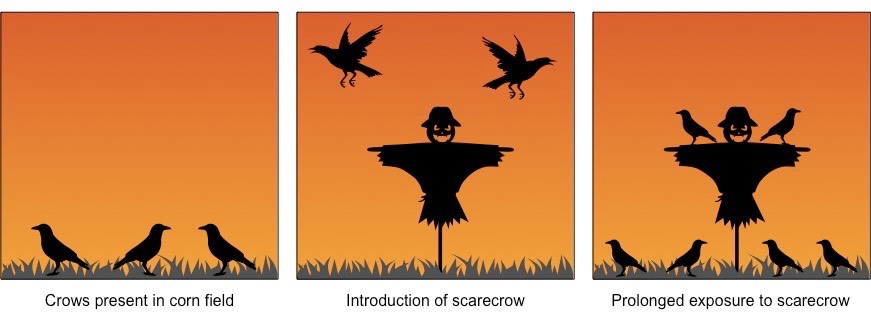
– Tần suất: Kích thích xuất hiện tần suất càng cao, thì quá trình tập quen sẽ diễn ra càng nhanh. Nếu bạn xịt một chai nước hoa mỗi ngày, bạn sẽ bớt để ý đến nó như khi chỉ xịt nó vào những dịp đặc biệt.
Frequency: The more frequently a stimulus is presented, the faster habituation will occur. If you wear that same perfume every day, you’re more likely to stop noticing it earlier than if you only wore it on special occasions.
– Cường độ: Kích thích cường độ cực kỳ cao sẽ đưa đến quá trình tập quen chậm hơn. Đôi lúc, tập quen sẽ không bao giờ xuất hiện. Trong một số trường hợp, đó có thể tiếng ồn điếc tai như còi xe hay còi báo động. Còi báo động xe sẽ không có hiệu quả tập quen như chuông báo nếu con người ta ngừng để ý đến nó sau một vài phút.
Intensity: Very intense stimuli tend to lead to slower habituation. Sometimes, habituation will never occur. In some cases, such as deafening noises like a car alarm or a siren, that makes sense. A car alarm wouldn’t be very effective as an alert if people stopped noticing it after a few minutes.
Các học thuyết về quá trình tập quen. Theories of Habituation
Tập quen là một ví dụ về quá trình học tập không qua liên tưởng. Trong dạng này, sẽ không có phần thưởng hay hình phạt nào được gắn với kích thích. Ví dụ, bạn không cảm thấy đau hay thỏa mãn bởi tiếng động ồn ào của nhà hàng xóm.
Habituation is an example of non-associative learning. In this type, there’s no reward or punishment associated with the stimulus. For example, you’re not experiencing pain or pleasure because of your neighbor’s banging noises.
Có hai học thuyết tâm lý nổi tiếng lý giải tại sao ta lại xuất hiện quá trình tập quen.
There are two well-known psychological theories about why we experience habituation:10
– Thuyết so sánh (hoặc mô hình tế bào thần kinh): Não bộ của chúng ta tạo ra mô hình các kích thích dự đoán trước. Khi ta tiếp xúc với một kích thích lặp đi lặp lại, nó được so sánh với một mô hình đã được tạo sẵn trong não. Tập quen xuất hiện nếu kích thích khớp với mô hình trong não.
Comparator (or neuronal-model) theory: Our brains create models of expected stimuli. When we’re exposed to a stimulus repeatedly, it gets compared to the model made by our brains. Habituation occurs if the stimulus matches the brain’s model.
– Thuyết hai yếu tố (hoặc quá trình kép): Khi liên tục bị tiếp xúc với một kích thích làm giảm sự kích thích và nhạy bén giác quan, quá trình tập quen sẽ xuất hiện.
Dual-factor (or dual-process) theory: When repeatedly being exposed to a stimulus causes decreased sensory sensitivity and arousal, habituation will occur.
Tập quen trong các mối quan hệ. Habituation in Relationships
Tập quen có thể gây hệ quả trong đời thực, bao gồm cả những mối quan hệ. Ví dụ, “tự mãn trong mối quan hệ” chính là một dạng tập quen. Dưới đây là một số lý do tại sao tình trạng này lại xảy ra:
Habituation can have real-world consequences, including in our social relationships.11 For example, “relationship complacency” is a form of habituation. Here are a few reasons why this can happen:
– Chúng ta dần quen với cái tốt và cái xấu: Khi ta dần hiểu rõ mọi người hơn, ta ngưng chú ý đến mọi thứ nhỏ nhặt và dần tập quen hơn với cả những phẩm chất tốt và phẩm chất không tốt lắm của đối phương.
We get used to the good and the bad: As we grow to know people better, we stop noticing every little thing and become increasingly habituated to both their good and not-so-good qualities.
– Chúng ta bỏ qua một số thứ và bị bực bội với những thứ khác: Bạn có thể tập quen dần với thói quen của đối phương mà lúc đầu bạn cực kỳ khó chịu, hay thậm chí dần trở nên khó chịu với những thứ mà ban đầu bạn bỏ qua.
We overlook some things and get irritated by others: You might grow accustomed to a partner’s habits that you found irritating at first, or even become increasingly annoyed by things that you overlooked initially.
– Sự mới mẻ làm tăng sự chú ý lúc mới đầu: Trong các giai đoạn đầu của mối quan hệ, con người ta thường phản hồi với nhau nhiều hơn. Mỗi một cảm giác đều cực kỳ kích thích vì nó mới.
Novelty increases attention in the beginning: In the beginning stages of any relationship, people tend to respond more readily to each other. Every sensation is thrilling because it is new.
– Sự mới mẻ dần không còn: Sự mới mẻ đầy hứng khởi của mối quan hệ không kéo dài mãi. Sau cùng thì tình trạng tập quen sẽ xuất hiện, và con người ta ngừng để ý đến mọi điều nhỏ nhặt về nửa kia của mình.
Newness eventually wears off: The exciting newness of a relationship does not last forever. Eventually, habituation sets in, and people stop noticing every little thing about their partners.12

Tập quen trong mối quan hệ không hoàn toàn là điều xấu. Sự đam mê đánh dấu giai đoạn đầu của mối quan hệ thường sẽ phải nhường chỗ cho điều gì đó sâu sắc và bền lâu hơn – một tình yêu có ý nghĩa được đánh dấu bởi tình bạn, sự hỗ trợ, và tôn trọng, kèm theo cùng đam mê.
Habituation in a relationship is not necessarily a bad thing. The passion that marks the start of a relationship often gives way to something deeper and more lasting—a more meaningful love that is marked by friendship, support, and respect, in addition to passion.
Tập quen là không tốt cho các mối quan hệ? Is Habituation Bad for Relationships?
Tập quen trong các mối quan hệ có thể gây vấn đề khi nó khiến ta coi mọi người là đương nhiên – điều này rất dễ xuất hiện trong các mối quan hệ lâu dài. Theo thời gian, bạn có thể bắt đầu cảm thấy nửa kia không trân trọng sự đóng góp của bạn vào mối quan hệ. Hoặc có lẽ chính người kia cũng cảm thấy họ bị bạn ngó lơ.
Habituation in relationships can be problematic when it leads to taking the other person for granted—something that can easily happen in a long-term relationship. Over time, you might start to feel like your partner does not appreciate how you contribute to the relationship. Or maybe it is your partner who feels that they are being overlooked by you.
Làm sao để vượt qua tình trạng tập quen trong mối quan hệ. How to Overcome Habituation in Relationships
Dưới đây là một số điều bạn có thể làm để mang lại tia lửa nồng nhiệt lúc ban đầu lại với mối quan hệ và đảo ngược tình trạng tập quen:
Here are some things you can do to bring some of the initial sparks back into your relationship and reverse habituation:

– Tập trung vào điều tích cực: Hãy dành thời gian nghĩ về những thứ bạn yêu thích ở người kia. Đâu là những phẩm chất bạn ngưỡng mộ nhất về người này? Thứ gì về họ thu hút bạn nhất lúc hai người mới gặp?
Focus on the positive: Take the time to think about the things you love about your partner. What are the qualities you admire most about this person? What things attracted you the most when you first met?
– Thể hiện sự biết ơn: Khi bạn dành nhiều thời gian hơn bên nửa kia, bạn sẽ rất dễ tập trung vào những thứ khiến bạn khó chịu về họ. Nếu bạn tập trung chỉ vào những phẩm chất này, thì bạn sẽ cực kỳ khó duy trì sự mãn nguyện và kết nối với người kia. Thay vào đó, hãy thể hiện lòng biết ơn về những gì tốt đẹp họ mang đến cuộc sống của bạn.
Practice gratitude: As you spend more and more time around your partner, it can be all too easy to focus on the things about them that you find irritating. If you focus only on these qualities, it can be extremely difficult to remain satisfied and connected. Instead, practice gratitude for the blessings they bring to your life.
– Gợi nhớ lại cảm giác lúc mới bắt đầu mối quan hệ: Hãy nghĩ về những điều mà lúc đầu bạn để ý và yêu thích về người kia. Hãy cân nhắc những thứ hai bạn thích làm cùng nhau. Việc dành thời gian để lưu tâm đến những phẩm chất này và làm lại những hoạt động trước kia là cách tốt để kết nối lại với đối phương.
Recall the feelings from the start of your relationship: Think about the things that you first noticed and loved about your partner. Consider the things you enjoy doing together as a couple. Taking the time to notice those qualities and reintroduce those activities is a good way to reconnect.
– Thử điều gì đó mới mẻ: Thông lệ và thói quen có thể khá hữu ích, nhưng cũng khiến bạn cảm thấy khá ngột ngạt. Hãy tìm cách thay đổi mọi thứ và thêm một chút mới lạ vào mối quan hệ. Hãy thử làm những hoạt động mới và khám phá mọi thứ cùng nhau. Đây là thể là một cách hay giúp xây dựng kết nối mạnh mẽ, cũng như là công cụ giúp bạn nhìn thấy nửa kia trong một luồng ánh sáng mới.
Try something new: Routines and habits can be helpful, but they can also feel stifling. Look for ways to change things up and add a zing of novelty back to your relationship. Try new activities as a couple and explore things together. It can be an interesting way of building a strong connection, as well as a means to see your partner in a new light.
Tổng kết. Summary
Tập quen giúp chúng ta lơ đi một số thứ nhất định trong môi trường để ta có thể tập trung vào những thứ quan trọng hơn trong thời điểm đó. Đây là một phần trải nghiệm bình thường của ta về thế giới. Tập quen giúp chúng ta vận hành trong những môi trường nơi ta luôn bị tràn ngập bởi các trải nghiệm và thông tin giác quan.
Habituation allows us to tune out certain things in our environment so we can focus on what’s more important at the moment. It’s a normal part of our experience of the world. Habituation helps us function in environments where we are being inundated with sensory experiences and information.
Đồng thời, tập quen cũng có thể gây vấn đề trong các mối quan hệ nếu nó khiến ta coi đối phương là đương nhiên. Việc tìm cách đảo ngược tình trạng này với những người ta thương có thể cực kỳ hữu ích giúp tạo dựng những mối quan hệ giúp mang lại cho ta tình yêu và niềm vui.
At the same time, habituation can be problematic in our relationships if it leads us to take others for granted. Finding ways to reverse habituation with people we care about can go a long way to creating relationships that bring us love and joy.
Tham khảo. Sources
APA Dictionary of Psychology. Habituation.
Klingner CM, Hasler C, Brodoehl S, Witte OW. Excitatory and inhibitory mechanisms underlying somatosensory habituation. Human Brain Mapping. 2012;35(1):152-160. doi:10.1002/hbm.22163
Blumstein DT. Habituation and sensitization: new thoughts about old ideas. Animal Behaviour. 2016;120:255-262. doi:10.1016/j.anbehav.2016.05.012
De Paepe A, Williams A, Crombez G. Habituation to pain: a motivational-ethological perspective. Pain. 2019;160(8):1693-1697. doi:10.1097/j.pain.0000000000001533
University of Michigan. Exposure and desensitization.
Jankowski J. Habituation’s effect on social networks as a potential factor silently crushing influence maximisation efforts. Sci Rep. 2021;11(1):19055. Published 2021 Sep 24. doi:10.1038/s41598-021-98493-9
Zagefka H. The habituation fallacy: Disaster victims who are repeatedly victimised are assumed to suffer less, and they are helped less. European Journal of Social Psychology. 2022;52(4):642-655. doi:10.1002/ejsp.2843
Benito K, Walther M. Therapeutic process during exposure: Habituation model. Journal of Obsessive-Compulsive and Related Disorders. 2015;6:147-157. doi:10.1016/j.jocrd.2015.01.006
Rankin CH, Abrams T, Barry RJ, et al. Habituation revisited: an updated and revised description of the behavioral characteristics of habituation. Neurobiol Learn Mem. 2009;92(2):135-138. doi:10.1016/j.nlm.2008.09.012
Steiner GZ, Barry RJ. The mechanism of dishabituation. Frontiers in Integrative Neuroscience. 2014;8. doi:10.3389/fnint.2014.00014
Julie Xuemei Hu, Shondrah Tarrezz Nash. Marriage and the Family. Routledge; 2019.
Morton H, Gorzalka BB. Role of partner novelty in sexual functioning: a review. J Sex Marital Ther. 2015;41(6):593-609. doi:10.1080/0092623X.2014.958788
Nguồn: https://www.verywellmind.com/what-is-habituation-2795233
Như Trang.
 Exploring Psychology - Khám Phá Tâm Lý Học