
Người thường xuyên tập thiền thì cực kỳ tin tưởng vào phương pháp này, nhưng nhiều người khác lại hoài nghi, nghĩ rằng, thiền có phần hơi “ảo”.
People who meditate regularly swear by it, but others are often skeptical of it, thinking it’s a little, you know, woo-woo.

Real Simple
Nhưng bạn nghĩ sao nếu chúng tôi nói rằng thiền thực sự là một cách huấn luyện cực kỳ hiệu quả giúp não bộ bình ổn và sắc bén hơn? Nghiên cứu khoa học đã cho thấy thiền thường xuyên có thể thay đổi hình dạng, kích thước và chức năng não bộ.
But what if we told you that meditation is actually a powerful way to train your brain to be calmer and sharper? That scientific studies have shown that meditating regularly can alter brain shape, size, and function?
“Thiền thực sự có thể tạo ra nhiều thay đổi trong cấu trúc não. Nó được chứng minh là làm tăng lượng chất xám trong não, đặc biệt là ở những vùng liên quan đến học tập, trí nhớ, điều tiết cảm xúc, và nhận thức”, theo TS. BS. Mirela Loftus, giám đốc y khoa tại Trung tâm y tế Newport.
“Meditation can actually create structural changes in the brain. It has been shown to increase gray matter in the brain, particularly in areas related to learning, memory, emotion regulation, and perspective,” says Mirela Loftus, MD, PhD, medical director at Newport Healthcare.
Dựa trên lượng bằng chứng khoa học ủng hộ thiền định, mọi bác sỹ đếu được, đều sẽ “kê toa” thiền như một loại thuốc, chia sẻ từ BS. Gary Soffer, một chuyên gia y khoa tại Khoa Y, Đại học Yale.
Based on the amount of scientific evidence supporting meditation, every doctor would be prescribing it if it were a pill, says Gary Soffer, MD, an integrative medicine specialist at Yale Medicine.
Hãy cùng tìm hiểu xem thiền định thực sự tác động thế nào lên não bộ. Let’s dive in and take a look at what meditating regularly does to your brain.
Tổng quan. At a Glance
Thiền định thường xuyên làm thay đổi não bộ theo nhiều cách. Nó làm thay đổi sóng não, làm tăng chất xám, và cải thiện tính kết nối trong não bộ. Còn gì nữa? Nó giúp thúc đẩy các chất hóa học hạnh phúc như dopamine và serotonin.
Meditating regularly changes the brain in several ways. It alters brain waves, increases gray matter, and improves connectivity within the brain. The cherry on top? It also boosts feel-good chemicals like dopamine and serotonin.
Cùng với đó, những thay đổi này khiến ta hạnh phúc hơn, bình tâm và nhạy bén hơn. Kết quả là, chúng ta dễ ứng phó tốt hơn với căng thẳng, tập trung vào các nhiệm vụ cần làm, và trải nghiệm cảm giác khỏe khoắn mỗi ngày.
Together, these changes make us happier, calmer, and sharper. As a result, we’re better equipped to handle stress, stay focused on tasks, and experience a greater sense of well-being in our daily lives.

Everyday Health
Thiền định làm gì với não bộ? What Meditating Every Day Does to Your Brain
Mặc dù thiền định là một hình thức thực hành cổ xưa, nhưng khoa học vẫn đang giải mã phổ lợi ích của nó. Một làn sóng nghiên cứu trong vài năm gần đây đã đi sâu tìm hiểu tác động của thiền định lên cả não bộ và cơ thể.
While meditation is an ancient practice, science is still unlocking the full spectrum of its benefits. A surge in research over the past few decades has investigated meditation’s effects on both the brain and body.
Điện não đồ và kỹ thuật chụp cộng hưởng từ (MRI) chức năng/cấu trúc đã được sử dụng để sơ đồ não và nghiên cứu tác động của thiền định lên não.
Electroencephalography (EEG) and structural/functional magnetic resonance imaging (MRI) techniques have been used to map the brain and study the effects of meditation on the brain.1
Thiền định đã được chứng minh là làm thay đổi nhiều khía cạnh trong cấu trúc và chức năng của não bộ.
Meditation has been shown to change many aspects of the brain’s structure and function.
— GARY SOFFER, MD
– Làm tăng chất xám. Increases Gray Matter
Thiền làm tăng chất xám trong não, đặc biệt là trong những vùng liên quan đến học tập, trí nhớ, điều tiết cảm xúc và nhận thức, theo TS. Loftus. Trong thực tế, các nghiên cứu chụp quét cho thấy thiền làm tăng kích thước và dung tích não, do nồng độ chất xám tăng.
Meditation increases gray matter in the brain, particularly in areas related to learning, memory, emotion regulation, and perspective, says Dr. Loftus. In fact, imaging studies show that meditation increases the size and volume of the brain, due to increased gray matter concentration.2
– Củng cố vỏ não trước trán. Strengthens the Prefrontal Cortex
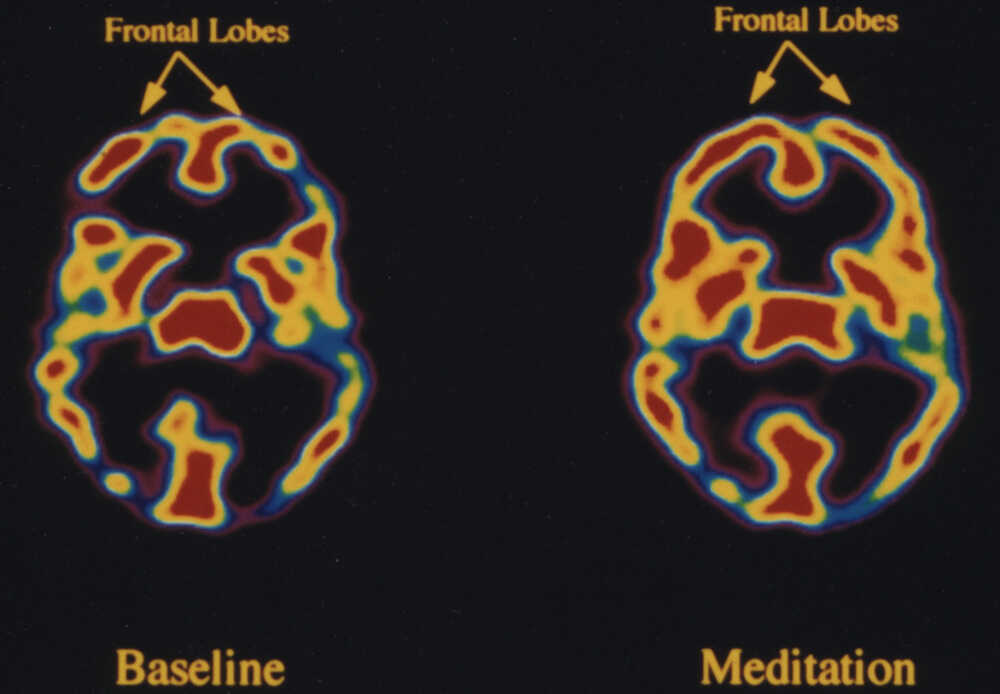
Thiền thường xuyên làm tăng độ dày của vỏ não trước trán, vùng đảm nhận nhiều chức năng ra mệnh lệnh cấp cao hơn của não như nhận thức, tập trung, trí nhớ và ra quyết định, TS. Loftus giải thích.
Regular meditation is linked to increased thickness of the prefrontal cortex, which is associated with higher-order brain functions such as awareness, concentration, memory, and decision-making, Dr. Loftus explains.
Chụp MRI cho thấy sự gia tăng của chất xám trong vỏ não trước trán, thiền cũng cải thiện kết nối thần kinh và chức năng nhận thức của khu vực này.
MRI scans have found that in addition to increasing the gray matter in the prefrontal cortex, meditation also improves the neural connectivity and cognitive function in this area.3
NPR
– Cải thiện tính mềm dẻo của não bộ. Improves Neuroplasticity
Tính mềm dẻo của não bộ là khả năng não bộ tự thay đổi và hồi phục bản thân dựa trên thông tin và trải nghiệm mới. Thiền định làm tăng tính mềm dẻo của não bằng cách cải thiện dạng thức kết nối thần kinh trong nhiều khu vực khác nhau trong não.
Neuroplasticity is the brain’s ability to change and rewire itself based on new information and experiences.4 Meditation increases neuroplasticity by improving neural connectivity patterns across different regions of the brain.5
Bằng cách tăng cường kết nối giữa các vùng não khác nhau, thiền có thể cải thiện các chức năng nhận thức, xử lý thông tin, và điều tiết cảm xúc, theo TS. Loftus.
By enhancing connectivity between different brain regions, meditation can improve cognitive functions, information processing, and emotional regulation, says Dr. Loftus.
– Tăng cường Dopamine và Serotonin. Boosts Dopamine and Serotonin
Dopamine và serotonin là các chất dẫn truyền thần kinh, hoặc các chất hóa học trong não. Thiền làm gia tăng số lượng các chất dẫn truyền thần kinh như serotonin và dopamine trong não, theo TS. Softer.
Dopamine and serotonin are neurotransmitters, or chemical messengers in the brain. Meditation is linked to a larger quantity of positive neurotransmitters like serotonin and dopamine in the brain, says Dr. Soffer.
Ngoài điều tiết các chức năng như ngủ, sinh trưởng, và chuyển hóa, những chất hóa học này đóng vai trò quan trọng trong duy trì cân bằng cảm xúc, bằng cách khiến chúng ta cảm thấy tích cực và hạnh phúc.
Apart from regulating functions like sleep, growth, and metabolism, these chemicals play an important role in maintaining our emotional equilibrium, by making us feel positive and happy.6
– Thay đổi sóng não. Alters Brain Waves

Minding The Bedside
Thiền không chỉ bình ổn huyết áp, nhịp thở, và nhịp tim mà nó còn thay đổi các sóng não. Điều này giúp ta thư giãn, tập trung và xử lý thông tin tốt hơn.
Meditation not only calms our blood pressure, respiratory rate, and heart rate, it also alters our brain waves.7 This helps us relax, concentrate, and process information better.
Những người tập thiền thường xuyên thường cho thấy lượng sóng gamma trong não lớn hơn, vốn có liên quan đến tăng cường nhận thức, giải quyết vấn đề, sự tỉnh táo, theo TS. Loftus.
Those who practice meditation regularly often exhibit higher levels of gamma brain waves, which are associated with heightened perception, problem-solving, and consciousness, says Dr. Loftus.
– Giảm kích thước hạch hạnh nhân. Decreases the Size of the Amygdala
Hạch hạnh nhân là cơ quan chịu trách nhiệm cho phản ứng chống trả – hay – bỏ chạy, thường co lại ở những người thường xuyên thiền, theo TS. Loftus. Nghiên cứu cho thấy điều này giúp giảm bớt đáng kể mức độ căng thẳng.
The amygdala, which is responsible for the fight-or-flight response, tends to shrink in people who meditate regularly, says Dr. Loftus. Research shows that this significantly reduces our stress levels.8
Lợi ích của thiền định. Benefits of Meditation
Từ những thay đổi này trong não, thiền mang đến cho chúng ta nhiều lợi ích về tinh thần, cảm xúc và nhận thức. Trong thực tế, ngoài cải thiện một số bệnh lý tâm thần nhất định, nó còn mang lại nhiều lợi ích lên hệ thần kinh và hệ miễn dịch, TS. Soffer nói.
As a result of these changes in the brain, meditation offers us several mental, emotional, and cognitive benefits. In fact, in addition to improving certain mental health conditions, it also benefits our nervous system and immune system, says Dr. Soffer.
Nghiên cứu cho thấy thiền có thể cải thiện: Research shows us that meditation can improve:
– Tâm trạng. Mood3
– Điều tiết cảm xúc. Emotional regulation9
– Tự nhận thức. Self-awareness9
– Chú ý. Attention9
– Sự tập trung. Concentration
– Trí nhớ. Memory2
– Năng lực không gian. Spatial abilities2
– Chức năng vận hành. (suy nghĩ, lên kế hoạch, ra quyết định). Execution function (thinking, planning, decision-making)3
– Giải quyết xung đột. Conflict resolution3
– Chánh niệm. Mindfulness10
– Thư giãn. Relaxation10
– Tự yêu thương bản thân. Self-compassion3
– Căng thẳng. Stress8
– Giấc ngủ. Sleep11
– Cơn đau. Pain3
– Lo âu. Anxiety3
– Trầm cảm. Depression3
– Mất ngủ. Insomnia11
– Rối loạn căng thẳng sau sang chấn. Post-traumatic stress disorder (PTSD)3

NeuroTrition
Làm sao để thiền định hằng ngày. How to Meditate Every Day
Cách tốt nhất để thu nhận được lợi ích từ thiền định là lồng ghép nó vào hoạt động thường ngày. Những lợi ích có được sẽ rất lớn nếu bạn duy trì thực hành thường xuyên, theo TS. Soffer.
The best way to reap the benefits of meditation is to incorporate it into your daily routine and practice it every day. The benefits can be vast if you stick to the practice, says Dr. Soffer.
Dưới đây là cách biến thiền định thành thói quen thường ngày. Here’s how you can make daily meditation a habit:
– Bắt đầu từ từ. Bạn có thể bắt đầu chỉ với một vài phút mỗi ngày. Thậm chí chỉ cần 5 phút thiền cũng đã rất hữu ích rồi. Khi bạn thoải mái hơn, bạn có thể tăng lên thành các buổi dài hơn.
Start small: You can start with just a few minutes every day. Even five minutes of meditation can be helpful. As you get more comfortable with it, you can work your way up to longer sessions.
– Chọn thời gian phù hợp: Chọn một thời gian cụ thể trong ngày phù hợp với bạn, dù là mới thức dậy buổi sáng, hay lúc nghỉ trưa, hay trước khi đi ngủ. Sự nhất quán sẽ giúp bạn hình thành thói quen.
Find a time that works for you: Choose a specific time of day that works best for you, whether it’s first thing in the morning, during your lunch break, or before bed. Consistency helps in forming a habit.
– Chọn một nơi yên tĩnh: Hãy chọn một nơi bạn có thể ngồi thoải mái và không bị làm phiền. Có thể là trên một chiếc ghế xích đu trước hiên nhà, một chiếc ghế ấm cúng trong nhà, hoặc thậm chí một góc yên tĩnh trong phòng.
Pick a quiet spot: Choose a place where you can sit comfortably and won’t be interrupted. It could be a swing on your porch, a cozy chair in your room, or even a quiet corner in your office.
– Thiết lập môi trường: Nếu thích, bạn có thể sắp đặt buổi thiền của mình bằng cách giảm độ sáng của đèn, bật nhạc thư giãn nhẹ nhàng, và thắp nến thơm.
Set the ambience: If you like, you can set the ambience for your meditation session by dimming the lights, playing gentle soothing music, and lighting a scented candle.
– Lên chủ đích: Trước khi bắt đầu thiền, hãy lên chủ đích hoặc mục tiêu rõ ràng về buổi tập. Có thể là để giảm căng thẳng, tăng cường tập trung, hay đơn giản chỉ là tận hưởng khoảng nghỉ ngơi khỏi một ngày bận rộn.
Set an intention: Before you start meditating, set a clear intention or goal for your practice. It could be to reduce stress, increase focus, or simply take a break from your busy day.
– Sử dụng chương trình thiền có hướng dẫn: Nếu bạn mới tập thiền và không biết bắt đầu thế nào, các chương trình thiền có hướng dẫn sẽ hỗ trợ bạn từng bước dễ hơn. Có nhiều chương trình miễn phí trực tuyến – bạn có thể chọn chương trình nào phù hợp nhất với nhu cầu và lịch trình của bạn.
Use a guided meditation program: If you’re new to meditating and not sure how to go about it, it can be easier to start with a guided meditation program that takes you through the steps. There are several free programs available online—you can choose the one that best fits your needs and your schedule.
– Tập trung vào hơi thở: Sử dụng hơi thở để làm “mỏ neo” cho bản thân vào khoảnh khắc hiện tại. Nếu tâm trí lang thang sang những thứ khác, nhẹ nhàng đưa sự tập trung trở lại hơi thở.
Focus on your breath: Use your breath to anchor you to the present. If your mind wanders to other things, gently bring your focus back to your breath.

Piedmont Healthcare
– Chiêm nghiệm buổi tập: Sau khi hoàn thành, hãy dành ra một chút thời gian để chiêm nghiệm lại hành trình. Bạn đã học được gì và cảm thấy như thế nào? Nếu muốn, bạn có thể viết ra suy nghĩ trong một cuốn nhật ký.
Reflect on the practice: After you finish, take a moment to reflect on your session. What did you feel and learn? If you like, you can write down your thoughts in a journal.
– Kiên nhẫn với bản thân: Việc xây dựng một thói quen mới cần thời gian. Hãy kiên nhẫn với bản thân trong hành trình này. Đừng bực bội khi tâm trí lang thang hoặc có bỏ lỡ một ngày tập. Sẽ có ngày dễ dàng và sẽ có những ngày khó khăn.
Be patient with yourself: Building a new habit takes time. Be patient with yourself on this journey. Don’t get frustrated if your mind wanders or if you miss a day. Some days will be easier and others will be harder.
Các bài tập thiền mẫu. Sample Meditations to Try
Nếu bạn muốn bắt đầu tập thiền, dưới đây là một số dạng bài thiền bạn có thể thử. If you want to get started with meditation, these are a few types you can try.
– Thiền ý thức hơi thở. Breath Awareness Meditation
Thiền ý thức hơi thở đơn giản là tập trung chú ý vào hơi thở. Dưới đây là cách làm. Breath awareness meditation simply involves focusing your attention on your breath. Here’s how to do it:
– Ngồi thoải mái và nhắm mắt lại. Sit comfortably and close your eyes.
– Hít một hơi thật sâu, mang sự chú ý về lại với hơi thở. Tập trung vào quá trình không khí đi vào mũi, lấp đầy dạ dày, và đi lại ra ngoài. Taking deep breaths, bring your attention to your breath. Pay attention to the way the air comes in through your nose, fills up your stomach, and goes out again.
– Nếu sự tập trung đi lang thang, hãy nhẹ nhàng mang nó trở lại với hơi thở. If your attention wanders, gently bring it back to your breath.
– Thực hành hoạt động này theo thời lượng bạn muốn. Khi xong, hãy từ từ mở mắt ra. Do this for as long as you like. When you’re done, open your eyes slowly.
– Thiền rà soát cơ thể. Body Scan Meditation
Thiền rà soát cơ thể là mang sự tập trung đến từng bộ phận trên cơ thể và chủ động thư giãn nó, từng bộ phận một. Dưới đây là cách làm:
Body scan meditation involves bringing your attention to each part of your body and consciously relaxing it, one at a time. Here’s how to do it:
– Nằm đặt lưng xuống và nhắm mắt lại. Lie down on your back and close your eyes.
– Mang sự chú ý đến ngón chân, hít vào và thư giãn chúng. Hãy để ý đến bất cứ cảm giác nào bạn có mà không cố gắng thay đổi bất kỳ điều gì. Bring your attention to your toes, breathing into them and relaxing them. Notice any sensations you feel without trying to change anything.
– Từ từ di chuyển sự chú ý đến bàn chân, mắt cá chân, bắp chân, đầu gối, đùi, v.v…, di chuyển dần lên đến đỉnh đầu. Slowly move your focus to your feet, ankles, calves, knees, thighs, and so on, up to the top of your head.
– Sau khi hoàn thành toàn bộ cơ thể, hít thở một vài hơi thật sâu và mở mắt ra. After you finish scanning your entire body, take a few deep breaths and open your eyes.
– Thiền tâm từ. Loving-Kindness Meditation
Thiền tâm từ là gửi đi những suy nghĩ tử tế đến bản thân, người thân yêu, và thế giới quanh bạn. Dưới đây là cách làm: Loving-kindness meditation involves sending kind thoughts to yourself, your loved ones, and the world around you. Here’s how to do it:
– Ổn định thoải mái, nhắm mắt lại và hít một vài hơi thật sâu. Get comfortable, close your eyes, and take a few deep breaths.
– Gửi sự tử tế đến bản thân. Bạn có thể thầm lặp lại câu “Chúc tôi hạnh phúc. Chúc tôi khỏe mạnh. Chúc tôi an toàn.” Send kindness to yourself. You can repeat silently, “May I be happy. May I be healthy. May I be safe.”
– Mở rộng sự tử tế đến những người thân. Nghĩ về một ai đó bạn yêu thương và lặp lại câu, “Chúc bạn hạnh phúc. Chúc bạn khỏe mạnh. Chsu bạn an toàn. Extend kindness to your loved ones. Think of someone you love and repeat, “May you be happy. May you be healthy. May you be safe.”
– Mở rộng sự tử tế đến những người khác. Từ từ mở rộng những lời chúc này đến một người bình thường, một ai đó bạn đang gặp khó khăn khi giao tiếp, và cuối cùng là đến tất cả mọi sinh vật đang sống. Expand kindness to others. Gradually extend these wishes to a neutral person, someone you have difficulty with, and finally to all living beings.
– Thiền tản bộ. Walking Meditation
Nếu bạn khó ngồi yên hoặc thích sự chuyển động, thiền tản bộ có thể dành cho bạn. Dưới đây là các thực hiện: If you find sitting still difficult and prefer movement, walking meditation may be for you. Here’s how to do it:
– Tìm một không gian yên tĩnh để thoải mái đi bộ qua lại. Find a quiet space to walk comfortably back and forth.
– Đi bộ chậm rãi, chú ý đến cảm giác ở chân khi chúng tiếp xúc với mặt đất. Walk slowly, paying attention to the sensations in your feet as they make contact with the ground.
– Kết hợp hơi thở với từng bước đi, hít vào và thở ra theo mỗi bước chân. Coordinate your breath with your steps, inhaling and exhaling with each step.
– Để ý bất kỳ suy nghĩ nào xuất hiện, để chúng đi và hướng sự tập trung trở lại việc đi bộ. Notice any thoughts that come to you, letting them go and returning your focus to walking.
– Quay lại và tiếp tục tản bộ chú tâm khi bạn đã đi đến điểm cuối. Turn around and continue walking mindfully when you reach the end of your space.
– Khi xong, hãy đứng yên, hít thở một vài nhịp, và chiêm nghiệm những gì vừa trải qua. When you’re done, stand still, take a few deep breaths, and reflect on the experience.

Elizabeth Caroline
Điều cần ghi nhớ. Key Takeaways
Mặc dù thiền định nghe tưởng đơn giản, nhưng nó lại có thể ảnh hưởng cực kỳ lớn lên não bộ. Lồng ghép thiền vào đời sống hằng ngày có thể giúp cải thiện chú ý, trí nhớ, và mức độ căng thẳng. Bạn có thể bắt đầu từ từ với chỉ vài phút mỗi ngày, tăng dần thời lượng các phiên tập lên theo thời gian. Hãy cố hết sức thực hành thường xuyên.
While meditation may seem simple on the surface, its impact on the brain is quite profound. Incorporating it into your daily routine can improve your attention, memory, mood, and stress levels. You can start slowly with just a few minutes a day, working your way up to longer sessions over time. Just do your best to be regular with it!
Tham khảo. Sources
Pernet CR, Belov N, Delorme A, Zammit A. Mindfulness related changes in grey matter: a systematic review and meta-analysis. Brain Imaging Behav. 2021 Oct;15(5):2720-2730. doi:10.1007/s11682-021-00453-4
Lardone A, Liparoti M, Sorrentino P, Rucco R, Jacini F, Polverino A, Minino R, Pesoli M, Baselice F, Sorriso A, Ferraioli G, Sorrentino G, Mandolesi L. Mindfulness meditation is related to long-lasting changes in hippocampal functional topology during resting state: a magnetoencephalography study. Neural Plast. 2018 Dec 18;2018:5340717. doi:10.1155/2018/5340717
Rathore M, Verma M, Nirwan M, Trivedi S, Pai V. Functional connectivity of prefrontal cortex in various meditation techniques: a mini-review. Int J Yoga. 2022 Sep-Dec;15(3):187-194. doi:10.4103/ijoy.ijoy_88_22
Washington University. Brain plasticity: what is it?
Guidotti R, Del Gratta C, Perrucci MG, Romani GL, Raffone A. Neuroplasticity within and between functional brain networks in mental training based on long-term meditation. Brain Sci. 2021 Aug 18;11(8):1086. doi:10.3390/brainsci11081086
Nationwide Children’s Hospital. Dopamine and serotonin: our own happy chemicals.
Katyal S, Goldin P. Alpha and theta oscillations are inversely related to progressive levels of meditation depth. Neurosci Conscious. 2021 Nov 29;2021(1):niab042. doi:10.1093/nc/niab042
Gotink RA, Vernooij MW, Ikram MA, Niessen WJ, Krestin GP, Hofman A, Tiemeier H, Hunink MGM. Meditation and yoga practice are associated with smaller right amygdala volume: the Rotterdam study. Brain Imaging Behav. 2018 Dec;12(6):1631-1639. doi:10.1007/s11682-018-9826-z
Tang R, Friston KJ, Tang YY. Brief mindfulness meditation induces gray matter changes in a brain hub. Neural Plast. 2020 Nov 16;2020:8830005. doi:10.1155/2020/8830005
Toussaint L, Nguyen QA, Roettger C, Dixon K, Offenbächer M, Kohls N, Hirsch J, Sirois F. Effectiveness of progressive muscle relaxation, deep breathing, and guided imagery in promoting psychological and physiological states of relaxation. Evid Based Complement Alternat Med. 2021 Jul 2;2021:5924040. doi:10.1155/2021/5924040
Rusch HL, Rosario M, Levison LM, Olivera A, Livingston WS, Wu T, Gill JM. The effect of mindfulness meditation on sleep quality: a systematic review and meta-analysis of randomized controlled trials. Ann N Y Acad Sci. 2019 Jun;1445(1):5-16. doi:10.1111/nyas.13996
Nguồn: https://www.verywellmind.com/what-meditating-every-day-does-to-your-brain-8656065
Như Trang
 Exploring Psychology - Khám Phá Tâm Lý Học