
Sigmund Freud được nhiều người biết đến nhất với trường phái phân tâm học mà ông sáng lập, nhưng ông cũng cực kỳ quan tâm đến tôn giáo. Lúc trưởng thành, ông tự nhận mình là người vô thần, nhưng gốc gác Do Thái và quá trình nuôi dạy đóng một vai trò quan trọng trong sự hình thành các tư tưởng của ông. Ông còn viết một vài cuốn sách có chủ đề tôn giáo. Hãy cùng tìm hiểu thêm về mối quan hệ phức tạp của Freud với tôn giáo và tâm linh.
Sigmund Freud is most famous for the psychoanalytic school of thought he founded, but he also took a keen interest in religion. As an adult, Freud considered himself an atheist, but his Jewish background and upbringing played an important role in the development of his ideas. He even wrote several books focused on the topic of religion. Learn more about Freud’s complicated relationship with religion and spirituality.
Những ảnh hưởng tôn giáo đầu tiên của Freud. Freud’s Early Religious Influences
Sigmund Freud có cha mẹ người Do Thái ở một thị trấn theo đạo Công Giáo La Mã tên Freiburg, Moravia. Mặc dù thể hiện khá rõ ràng mình là vô thần và tin rằng tôn giáo là một thứ cần phải vượt qua, ông vẫn nhận thức được ảnh hưởng mạnh mẽ của tôn giáo lên bản dạng. Ông công nhận rằng sự kế thừa đạo Do Thái cũng như chủ nghĩa bài Do thái mà ông thường gặp phải đã giúp ông định hình tính cách của mình.
Sigmund Freud was born to Jewish parents in the heavily Roman Catholic town of Freiburg, Moravia.1 Although he was straightforward about his atheism and believed that religion was something to overcome, he was aware of its powerful influence on identity. He acknowledged that his Jewish heritage, as well as the antisemitism he frequently encountered, had helped shape his personality.
“Ngôn ngữ của tôi là Tiếng Đức. Văn hóa, những gì tôi lĩnh hội được đều thuộc về Đức. Về trí tuệ, tôi coi mình là người Đức cho đến khi tôi để ý thấy định kiến bài Do Thái ở Đức và các vùng Áo Đức. Kể từ đó, tôi thích gọi bản thân là người Do Thái,” theo tài liệu viết vào năm 1925.
“My language is German. My culture, my attainments are German. I considered myself German intellectually until I noticed the growth of anti-Semitic prejudice in Germany and German Austria. Since that time, I prefer to call myself a Jew,” he wrote in 1925.2
Freud nghĩ thế nào về tôn giáo. Religion According to Freud

Story Prism – Substack
Vậy Freud cảm thấy thế nào về tôn giáo? Trong một số ghi chép nổi tiếng nhất của mình, ông cho rằng tôn giáo là một “ảo tưởng”, một dạng loạn thần kinh, và thậm còn có thể là một dạng nỗ lực để giành lấy kiểm soát.
So how did Freud feel about religion? In some of his best-known writings, he suggested that it is an “illusion,” a form of neurosis, and perhaps even an attempt to gain control.
Freud tin rằng tôn giáo là một dạng biểu hiện của các rối loạn và bất ổn tâm lý – một nỗ lực để lấy lại kiểm soát với thế giới bên ngoài. Trong nhiều nội dung trong các ghi chép của mình, ông cũng cho rằng tôn giáo là nỗ lực kiểm soát Phức cảm Oedipus (hoặc Phức cảm Electra ở nữ), một công cụ giúp mang đến cấu trúc cho các nhóm xã hội, một kiểu hoàn thành ước nguyện, một ảo tưởng trẻ con và một ham muốn kiểm soát thế giới bên ngoài.
Religion, Freud believed, was an expression of underlying psychological neuroses and distress—an attempt to gain control over the external world.3 At various points in his writings, he also suggested that religion is an attempt to control the Oedipal complex (as opposed to the Electra complex), a means of providing structure in social groups, wish fulfillment, an infantile delusion, and a desire to control the outside world.
Ông viết trong một vài cuốn sách liên quan về chủ đề này, bao gồm cuốn “Totem and Taboo” (1913), cuốn “The Future of an Illusion” (1927). “Civilization and Its Discontents” (1930) và “Moses and Monotheism” (1929).
He wrote several books devoted to the subject, including “Totem and Taboo” (1913), “The Future of an Illusion” (1927), “Civilization and Its Discontents” (1930), and “Moses and Monotheism” (1939).
Pin page
Trích ngôn nổi tiếng. Notable Quotes
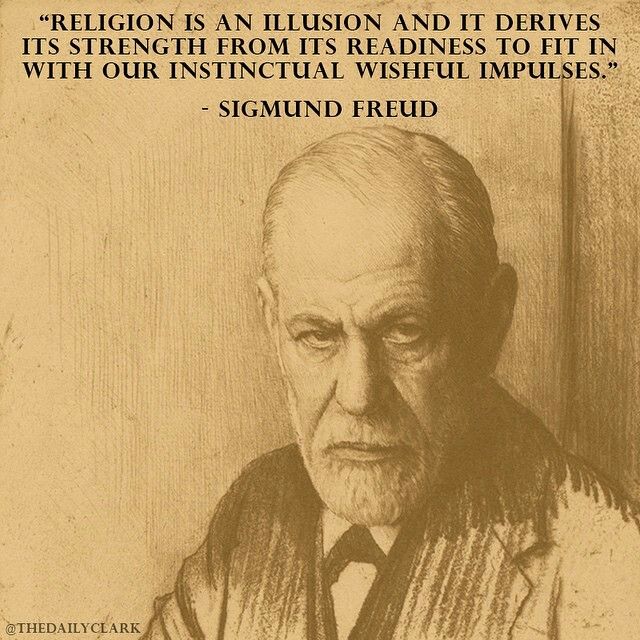
Trong cuốn “New Introductory Lectures on Psychoanalysis” (1933), Freud có viết: “Tôn giáo là một ảo tưởng có được sức mạnh từ sự sẵn sàng lồng ghép nó vào với những ham muốn của bản năng.”
In his “New Introductory Lectures on Psychoanalysis” (1933), Freud wrote: “Religion is an illusion and it derives its strength from its readiness to fit in with our instinctual wishful impulses.”
Cũng trong cuốn này, Freud viết: “Tôn giáo là một nỗ lực làm chủ thế giới giác quan nơi chúng ta sống bằng thế giới mơ ước mà chúng ta đã vun đắp bên trong mình từ những nhu cầu tâm lý và sinh học… Nếu chúng ta nỗ lực gắn ghép một vị trí cho tôn giáo trong quá trình tiến hóa của nhân loại, nó sẽ không phải là một dạng tiếp nhận vĩnh viễn mà là một đối trọng với chứng loạn thần kinh mà mỗi người phải trải qua trong quá trình từ bé đến lớn.”
In the book “New Introductory Lectures on Psychoanalysis,” Freud wrote: “Religion is an attempt to master the sensory world in which we are situated by means of the wishful world which we have developed within us as a result of biological and psychological necessities … If we attempt to assign the place of religion in the evolution of mankind, it appears not as a permanent acquisition but as a counterpart to the neurosis which individual civilized men have to go through in their passage from childhood to maturity.”
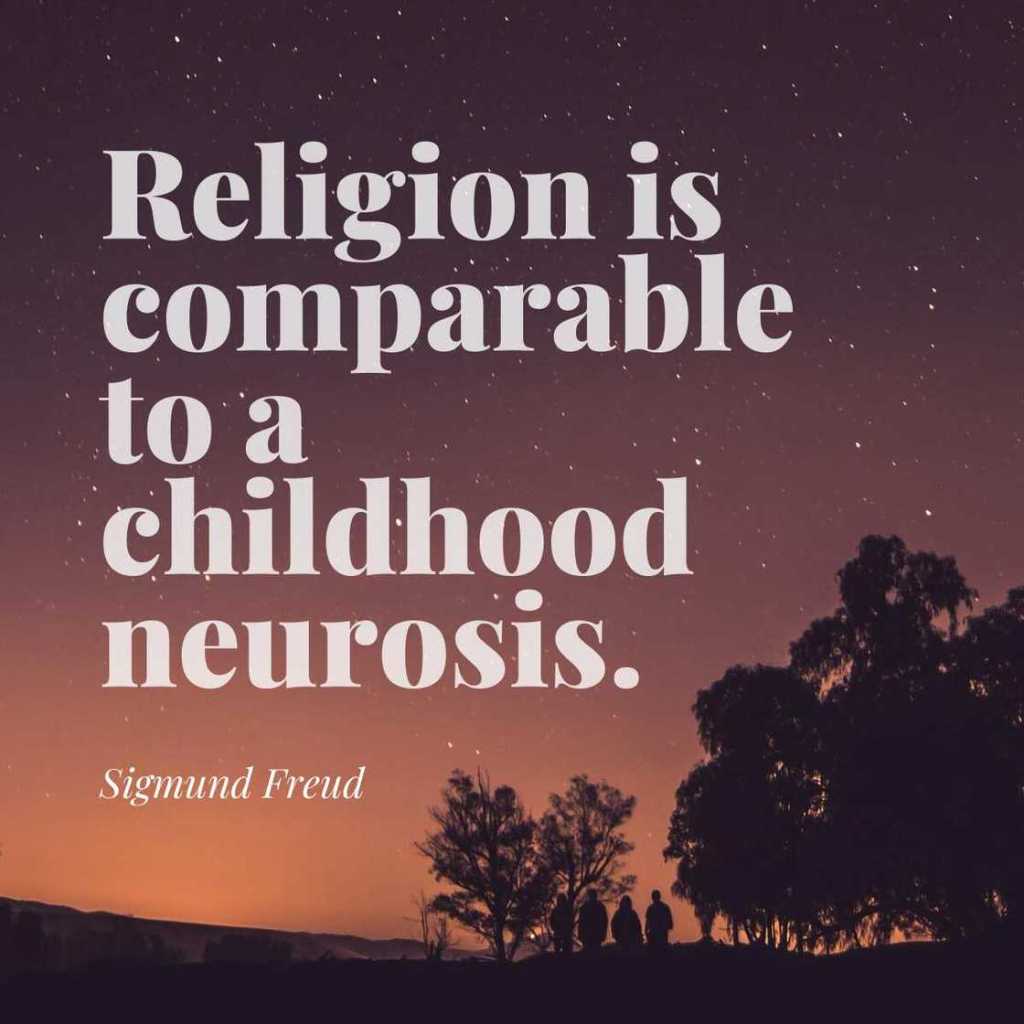
Trong cuốn “The Future of Illusion”, Freud viết, “Tôn giáo có thể sánh với loạn thần kinh thời thơ ấu.”
In “The Future of an Illusion,” Freud wrote, “Religion is comparable to a childhood neurosis.”
Phê bình của Freud dành cho tôn giáo. Freud’s Criticisms of Religion
Mặc dù bị thu hút bởi tôn giáo và tâm linh, nhưng Freud lại khá phê bình các phạm trù này. Ông phê bình tôn giáo là không chào đón, hà khắc, và không yêu thương những người không phải là thành viên của một nhóm tôn giáo cụ thể.
Although fascinated by religion and spirituality, Freud was quite critical. He critiqued religion for being unwelcoming, harsh, and unloving toward those who are not members of a specific religious group.
Trong cuốn “The Future of Illusion” (1927), Freud viết “Kiến thức của chúng ta về giá trị lịch sử của một số học thuyết tôn giáo làm tăng sự tôn trọng của ta dành cho chúng, nhưng không làm làm giảm giá trị của quan điểm cho rằng ta nên ngừng đẩy chúng ra làm lý do cho những giới luật của nền văn minh. Ngược lại! Những tàn tích lịch sử đã giúp ta nhìn nhận những bài giảng tôn giáo theo đúng như bản chất của chúng, và là những di vật của chứng loạn thần kinh, và chúng ta có thể tranh luận rằng đã giờ đã đến lúc, giống như trong xử lý phân tích, để thay thế những ảnh hưởng của sự đàn áp bằng quá trình vận hành trí tuệ hợp lý.”
In “The Future of an Illusion” (1927), Freud wrote: “Our knowledge of the historical worth of certain religious doctrines increases our respect for them, but does not invalidate our proposal that they should cease to be put forward as the reasons for the precepts of civilization. On the contrary! Those historical residues have helped us to view religious teachings, as it were, as neurotic relics, and we may now argue that the time has probably come, as it does in an analytic treatment, for replacing the effects of repression by the results of the rational operation of the intellect.”4
Legit.ng
Một số bình luận chỉ trích nhất nằm trong cuốn “Civilization and Its Discontents”: “Toàn bộ đều quá đỗi trẻ con, xa rời thực tế đến mức đối với bất cứ ai có thái độ thiện lành với nhân loại thì sẽ thật đau đớn khi nghĩ rằng đại đa số con người chẳng bao giờ vượt lên trên những quan điểm sống này.”
Some of his most critical comments appear in his text “Civilization and Its Discontents”: “The whole thing is so patently infantile, so foreign to reality, that to anyone with a friendly attitude to humanity it is painful to think that the great majority of mortals will never be able to rise above this view of life.”
Tôn giáo lúc nào cũng chú trọng vào vai trò được thể hiện trong quá trình văn minh hóa bằng cảm giác tội lỗi. Ngoài ra – một điểm mà tôi không đánh giá cao- đó là họ tuyên bố cứu rỗi nhân loại khỏi cảm giác tội lỗi, cái mà họ gọi là một “tội”.
Religions, at any rate, have never overlooked the part played in civilization by a sense of guilt. Furthermore—a point which I failed to appreciate elsewhere—they claim to redeem mankind from this sense of guilt, which they call sin.”5
Quan điểm của Freud về Đức tin. Freud on Faith
“Còn nhục nhã hơn khi phát hiện ra rằng hiện nay có rất nhiều người thấy một tôn giáo không thể đứng vững được, lại cố gắng bảo vệ nó từng chút một bằng một loạt hành động hậu vệ đáng thương.”
“It is still more humiliating to discover how a large number of people living today, who cannot but see that this religion is not tenable, nevertheless try to defend it piece by piece in a series of pitiful rearguard actions.”5
Góc nhìn phân tâm học. The Psychoanalytic View
Từ góc nhìn phân tâm học của Freud, tôn giáo là nhu cầu muốn thỏa mãn ước nguyện của tâm trí vô thức. Freud tin rằng con người ta chọn tin vào Chúa Trời, người đại diện như hình tượng một người cha đầy quyền lực, vì họ cần cảm thấy an toàn và xóa bỏ cảm giác tội lỗi,
From Freud’s psychoanalytic perspective, religion is the unconscious mind’s need for wish fulfillment. Freud believed that people choose to believe in God, who represents a powerful father figure, because they need to feel secure and absolve themselves of guilt.
Tham khảo. Sources
Library of Congress. A Word About Antisemitism. In: Sigmund Freud: Conflict and Culture Exhibition.
Skoll GR, Maximiliano K. Risks, totems, and fetishes in Marx and Freud. Sincronía. 2012(62):1-27.
Freud, S., & Freud, S. (1989). The Future of an Illusion (Standard ed). Norton.
Freud, S., & Strachey, J. (2010). Civilization and Its Discontents. W.W. Norton & Company.
Nguồn: https://www.verywellmind.com/freud-religion-2795858
Như Trang.
 Exploring Psychology - Khám Phá Tâm Lý Học