
Trì hoãn sự thỏa mãn là “hành động chống lại thôi thúc nhận lấy phần thưởng tức thời với hy vọng sẽ thu được phần thưởng giá trị hơn trong tương lai. Khả năng trì hoãn sự thỏa mãn là thứ tối cần thiết giúp điều tiết bản thân, hoặc tự kiểm soát bản thân.”
Delaying gratification is “the act of resisting an impulse to take an immediately available reward in the hope of obtaining a more-valued reward in the future. The ability to delay gratification is essential to self-regulation, or self-control.”1

Trì hoãn sự thỏa mãn có nghĩa là ưu tiên cho những mục tiêu dài hạn thay vì những thứ dễ có được ngay. Kháng cự lại sự cám dỗ của sự thỏa mãn tức thời có thể mang đến lợi ích đáng kể, đáng để bản thân chấp nhận thử thách. Tin tốt là: Luôn có cách để chúng ta xây dựng khả năng kiểm soát thôi thúc.
Delaying gratification means prioritizing a long-term goal over an immediately achievable one. Resisting the temptation of instant gratification can yield significant benefits that outweigh the challenges. The good news: There are ways to develop impulse control.
Trì hoãn sự thỏa mãn trong đời sống thường nhật. Delaying Gratification in Everyday Life
Hình dung bạn đang cực kỳ nỗ lực để giảm cân với chế độ ăn uống lành mạnh. Bạn sẽ làm gì khi ở trong một bữa tiệc ở chỗ làm và được mời một trong những miếng bánh quy với công thức làm bí mật mà Izzy ở bộ phận kế toán làm? Nếu bạn nhượng bộ và ăn một vài miếng, khả năng cao là bạn sẽ ăn thêm nữa – và rồi chán nản với bản thân vì đã bỏ cuộc. Cái tiếp diễn sau đó chính là một chu kỳ tiêu cực không dứt ngăn bạn cải thiện sức khỏe của bản thân.
Suppose you’re making great efforts to lose weight on a healthful diet. What do you do at the office party when offered one of those secret-recipe cookies that Izzy in accounting makes? If you give in and eat a few, chances are good that you’ll have more—and then become so discouraged that you give up. What can follow is a constant cycle of negativity that can prevent you from improving your health altogether.
Nhưng bạn sẽ được tận hưởng hương vị và cảm giác ngon khi ăn – ngay cả khi bạn đã từng ăn bánh quy này trước đây – trong một vài phút. Đây là một sự đánh đổi quá đắt.
But you will have enjoyed that flavor and texture—even though you’ve had those cookies before—for a few minutes. It’s a steep tradeoff.
Tuy nhiên, nếu bạn có thể kháng cự và dành buổi tối ăn cà rốt, bạn sẽ nhận được phần thường lớn hơn sau này: Giảm bớt một vài kg và cải thiện sức khỏe.
However, if you manage to resist and spend the evening munching on carrot sticks, you’ll receive an even greater reward down the line: shedding unwanted pounds and improving your health.
Khả năng ưu tiên cho mục tiêu dài hạn được coi là thành tố trọng tâm của năng lực tự kiểm soát, và xây dựng được khả năng này từ thời thơ ấu sẽ giúp đưa đến kết quả tích cực thời trưởng thành.
This ability to prioritize a long-term goal is considered central to self-control, and its development throughout childhood is associated with positive outcomes in adulthood.2

Khả năng trì hoãn sự thỏa mãn không chỉ là cấu phần quan trọng giúp bạn đạt được mục tiêu: Nó còn có thể có tác động lớn lên thành công lâu dài và sức khỏe của bạn.
The ability to delay gratification is not just an important part of goal achievement: It might also have a major impact on long-term success and overall well-being.
Thí nghiệm kẹo Mashmallow Standford. The Stanford Marshmallow Experiment
Trong một thí nghiệm tâm lý kinh điển từ những năm 1970, nhà tâm lý học Walter Mischel đã để các phần thưởng trước mặt nhóm trẻ và đưa ra một lựa chọn: Chúng có thể nhận lấy một phần thường ngay bây giờ, hoặc chờ thêm một khoảng thời gian để được hai phần thưởng. Khi nhà nghiên cứu rời khỏi phòng, nhiều đứa trẻ đã ngay lập tức ăn luôn viên kẹo, nhưng một số khác cố kìm bản thân lại, và rồi kiếm được cho bản thân 2 viên kẹo.
In a classic psychology experiment from the 1970s, psychologist Walter Mischel placed a treat in front of children and offered them a choice: They could enjoy the one treat now, or wait a brief time to get two snacks instead. When the experimenter left the room, many of the kids immediately ate the treat, but some were able to resist, earning themselves two rewards.3
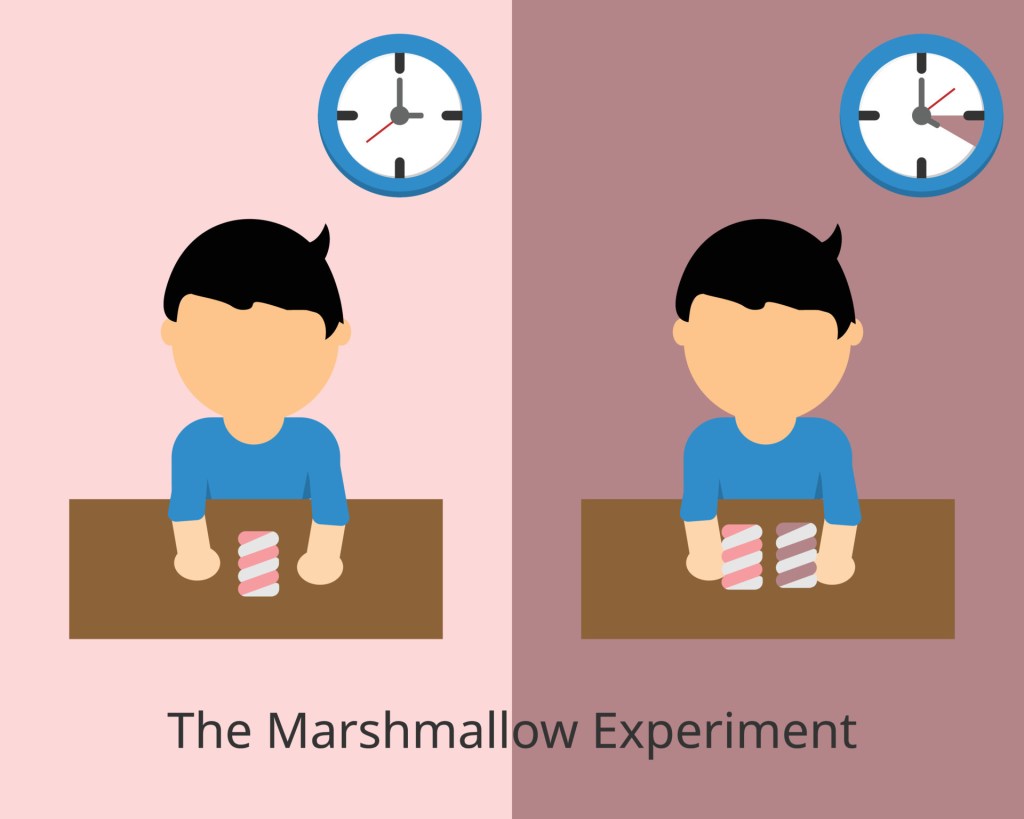
Mischel sau đó mô tả mối liên hệ giữa những trẻ có thể trì hoãn sự thỏa mãn và một vài thuận lợi sau này so với những trẻ không thể chờ đợi. Trẻ biết chờ đợi có kết quả học tập tốt hơn nhiều năm sau này so với những trẻ ăn phần thưởng ngay lập tức. Những trẻ trì hoãn sự thỏa mãn cũng cho thấy ít hành vi có vấn đề hơn về sau và đạt được điểm SAT cao hơn.
Mischel then demonstrated an association between the kids who were able to delay gratification and several advantages later on over the kids who simply could not wait. The children who had waited for the treat performed better academically years later than kids who ate the treat right away. Those who delayed their gratification also displayed fewer behavioral problems and later had much higher SAT scores.2
Tại sao chờ đợi lại khó như vậy? Why Is It So Hard to Wait?
Mặc cho những hệ quả khó chịu, con người dường như luôn muốn được thỏa mãn ngay lập tức. Tâm lý học đương đại đưa ra một vài cách giải thích khác nhau:
Despite the adverse effects, humans seem to be wired for instant satisfaction. Contemporary psychology offers a few different explanations:
– Theo tâm lý học tiến hóa, sự thiếu chắc chắn về phần thưởng trong tương lai khiến việc trì hoãn thỏa mãn trở nên khó cực kỳ. Nói theo cách khác, chúng ta không biết khi nào phần thưởng dài hơi này sẽ đến – nếu mà chúng có đến. Điều này rất có ích với tổ tiên thời tiền sử sống sót trong một thế giới nơi các nguồn lực không ai đoán biết trước được. Họ tận dụng cơ hội khi nó xuất hiện vì sau này biết đâu lại không có mà tận dụng.
According to evolutionary psychology, uncertainty about future rewards makes delaying gratification a challenge. In other words, we don’t know when these long-term rewards will arrive—if they even arrive at all.4 This helped our prehistoric ancestors survive in a world where resources were unpredictable. They took advantage of the opportunities as they occurred because they might not be available later.5
– Tâm lý học nhận thức quy hiện tượng này về những thiên kiến nhận thức như chiết khấu tạm thời, chiết khấu hyperbol, và thiên kiến hiện tại.
Cognitive psychology chalks it up to cognitive biases such as temporal discounting, hyperbolic discounting, and the present bias.6
– Các nhà thần kinh học giải thích rằng trung tâm xử lý phần thưởng và kiểm soát thôi thúc trong não bộ vẫn phát triển cho đến thời trưởng thành nên việc ngay lập tức thỏa mãn đặc biệt được ưu tiên ở nhóm thanh thiếu niên và người trẻ.
Neuroscientists explain that the rewards processing and impulse control centers of the brain are still developing into early adulthood, making instant gratification particularly desirable for adolescents and young adults.7

Các yếu tố tác động khác có thể bao gồm đặc trưng tính cách, sức khỏe tâm thần, bối cảnh xã hội, hoàn cảnh công việc, và các đặc điểm cá nhân khác.
Other factors can include personality traits, mental health, social circumstances, work situations, and other individual characteristics.8
Yếu tố niềm tin có liên hệ mật thiết với hành vi này. Việc bạn có sẵn lòng chờ đợi hay không còn tùy thuộc vào thế giới quan của bạn. Bạn có chờ một thứ gì đó mà bạn không chắc rằng nó thực sự sẽ xảy ra? Bạn có niềm tin vào năng lực đạt đến mục tiêu của bản thân? Bạn càng ít tin vào viễn cảnh một kết quả nhất định sẽ xảy ra thì bạn càng dễ từ bò nó để ưu tiên cho những gì sẵn có.
Closely related is the trust factor. Whether you’re willing to wait might depend on your worldview. Do you wait for something if you aren’t sure it will ever really happen? Do you have faith in your abilities to reach your goal? The less you trust the promise of a given outcome, the more likely you are to forego it in favor of what’s demonstrably available.
Làm sao để tăng khả năng trì hoãn sự thỏa mãn? How to Increase Your Ability to Delay Gratification
Một số cách có thể giúp bạn cải thiện năng lực trì hoãn sự thỏa mãn: Some strategies that might help you improve your ability to delay gratification include:
– Thiết lập khung thời gian cụ thể: Việc đưa ra phản hồi cho chính khoảng thời gian mà một người sẽ phải chờ đợi một thứ gì đó sẽ khá hữu ích. Các nhà ga có thể đưa ra thời gian chờ chẳng hạn. Giáo viên có thể nói học sinh biết rằng một phần thưởng hay ho sẽ xuất hiện vào thứ Sáu nếu chúng chịu tập trung hôm nay. Cha mẹ có thể nói với con, “Đừng ăn cái bánh quy đó. Chúng ta sẽ đi dã ngoại chiều hôm nay, và con có thể có 2 miếng bánh để ăn với bạn sau bữa trưa.”
Giving definitive timeframes: Providing feedback on just how long someone will have to wait for something can be beneficial.9 Train stations might post wait times, for example. Teachers might tell students a promised reward will arrive Friday if they stay on track today. A parent might tell a child, “Don’t eat that cookie. We’re going on a picnic at noon, and you can have two with your friends right after lunch.”

– Tạo giới hạn thời gian thực tế: Con người ta thường đặt ra những hạn chót hoặc điểm chuẩn phi thực tế. Ví dụ, một người mắc tiền tiểu đường có thể thề thốt sẽ không ăn miếng kẹo nào trong một năm – một mục tiêu đặt ra chỉ để thất bại. Một mục tiêu dễ đạt được hơn, như không ăn kẹo trong tuần nhưng có thể tự thưởng một thanh socola đen vào Chủ Nhật sẽ dễ giúp bạn thành công hơn.
Setting realistic deadlines: People often set unrealistic deadlines or benchmarks.10 For example, a person with prediabetes might vow to consume absolutely no candy for an entire year—setting themselves up for failure. A more achievable goal, such as resisting candy during the week but enjoying your favorite dark chocolate on Sunday, is more likely to produce success.
Kết luận. Bottom lines
Trì hoãn sự thỏa mãn chắc chắn là không dễ, đặc biệt là nếu ta không mấy chắc chắn liệu phần thưởng khó tìm này có thực sự xảy ra hay không. Tuy nhiên, khả năng trì hoãn ham muốn tức thời để theo đuổi những mục tiêu lâu dài chính là một phần tối quan trọng của thành công. Mặc dù bạn không phải lúc nào cũng có thể kháng cự lại ham muốn thỏa mãn nhất thời, nhưng khoa học cho thấy việc thử thực hiện một số chiến lược mới và nỗ lực cải thiện ý chí đều là những nỗ lực xứng đáng.
Delaying gratification certainly isn’t easy, especially if we are not sure if the sought-after rewards will ever happen. However, this ability to put off immediate desires to pursue long-term goals just might be a critical part of success. Although you might not always be able to resist instant gratification, science says that trying a few new strategies and working on your willpower are worth the effort.
Tham khảo. Sources
Delay of Gratification | Psychology, Self-Control & Benefits. Britannica. (n.d.).
Casey, B. J., Somerville, L. H., Gotlib, I. H., Ayduk, O., Franklin, N. T., Askren, M. K., Jonides, J., Berman, M. G., Wilson, N. L., Teslovich, T., Glover, G., Zayas, V., Mischel, W., & Shoda, Y. (2011). Behavioral and neural correlates of delay of gratification 40 years later. Proceedings of the National Academy of Sciences, 108(36), 14998–15003. doi:10.1073/pnas.1108561108
Mischel W, Ebbesen EB. Attention in delay of gratification. J Pers Soc Psychol. 1970;16(2):329–337. doi:10.1037/h0029815
McGuire JT, Kable JW. Decision makers calibrate behavioral persistence on the basis of time-interval experience. Cognition. 2012;124(2):216-26. doi:10.1016/j.cognition.2012.03.008
Evolutionary psychology: The new science of the mind. (n.d.). Routledge & CRC Press.
Mischel, W. (2014). The marshmallow test: Mastering self-control (First edition). Little, Brown and Company.
Casey, B., & Jones, R. M. (2010). Neurobiology of the adolescent brain and behavior. Journal of the American Academy of Child and Adolescent Psychiatry, 49(12), 1189–1285. doi:10.1016/j.jaac.2010.08.017
Duckworth, A. L., & Seligman, M. E. P. (2005). Self-discipline outdoes IQ in predicting academic performance of adolescents. Psychological Science, 16(12), 939–944. doi:10.1111/j.1467-9280.2005.01641.x
McGuire JT, Kable JW. Decision makers calibrate behavioral persistence on the basis of time-interval experience. Cognition. 2012;124(2):216-26. doi: 10.1016/j.cognition.2012.03.008
Gelinas BL, Delparte CA, Hart R, Wright KD. Unrealistic weight loss goals among bariatric surgery candidates: The impact on pre- and postsurgical weight outcomes. Bariatric Surgical Practice and Patient Care. 2013;8(1). doi:10.1089/bari.2013.9999
Nguồn: https://www.verywellmind.com/delayed-gratification-why-wait-for-what-you-want-2795429
Như Trang.
 Exploring Psychology - Khám Phá Tâm Lý Học